Mahindra XEV 9e vs Tata Harrier EV: Price, Range, Features & Specifications Compared (2026)
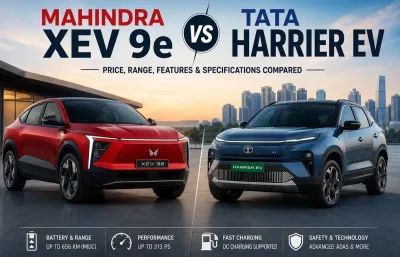
India's premium electric SUV segment is becoming more exciting than ever. Two of the biggest names in this category are the Mahindra XEV 9e and the Tata Harrier EV. Both are developed by Indian manufacturers, offer long driving ranges, advanced technology, premium interiors, and impressive performance. The Mahindra XEV 9e has been designed as a futuristic electric-first SUV coupe based on Mahindra's INGLO architecture.
Tata Harrier EV combines the familiar Harrier design with Tata's latest electric vehicle technology and all-wheel-drive capability. If you're planning to spend around ₹25-35 lakh on an electric SUV, choosing between Mahindra XEV 9e and Tata Harrier EV can be difficult. To ease the confusion, we have discussed comparisons that explain everything, from design and battery options to charging, features, safety, and performance, specifications, etc.
Comparison Between Mahindra XEV 9e vs Tata Harrier EV
| Feature | Mahindra XEV 9e | Tata Harrier EV |
| Price (Starting) | ₹21.90 lakh | ₹21.49 lakh |
| Battery Options | 59 kWh, 79 kWh | 65 kWh, 75 kWh |
| Drive Layout | Rear-Wheel Drive | RWD & AWD |
| Maximum Power | Up to 210 kW | Up to 313 PS (AWD) |
| Charging Time | 20 to 80% in 20 minutes with a 180 kW DC fast charger. | 20 to 80% in 25 minutes with a 120 kW DC charger. |
| Maximum Torque | 380 Nm | Up to 504 Nm |
| Claimed Range | Up to 656 km (MIDC) | Up to 627 km (MIDC) |
| Motor Type | Permanent Magnet Synchronous Motors (PMSM | 2- Permanent Magnet Synchronous Motors (PMSM |
| Platform | INGLO EV Platform | acti.ev+ Architecture |
| Seating Capacity | 5 | 5 |
| Charging options | 80 kW DC fast-charging capacity & supports 7.2 kW to 11.2 kW AC home charging | 107 kW DC fast charging & comes with a 7.2 kW AC charger |
| Boot Space | Larger rear boot with front storage | 502-litre boot |
Both Mahindra XEV 9e and Tata Harrier EV are exceptionally great in terms of performance, power, charging, interior, design, battery and more. But to create a clear impact and define the importance of Mahindra XEV 9e and Tata Harrier EV, here a detailed comparison:
Price Comparison
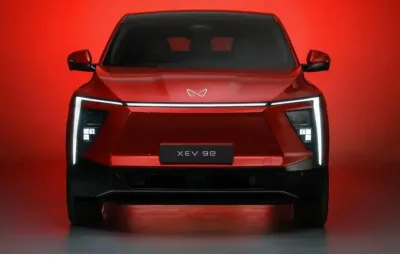
Mahindra XEV 9e: starts from ₹21.90 lakh and goes up to ₹30.50 lakh (Pack Three) (ex-showroom).
Tata Harrier EV: starts from ₹21.49 lakh and goes up to ₹30.23 lakh (ex-showroom)
Here’s a list of Variant-wise prices of Mahindra XEV 9e and Tata Harrier EV:
| Mahindra XEV 9e Variant | Battery Pack | Price (Ex-showroom) | Tata Harrier EV Variant | Battery Pack | Price (Ex-showroom) |
| Pack One | 59 kWh | ₹21.90 lakh | Adventure 65 | 65 kWh | ₹21.49 lakh |
| Pack Two | 59 kWh | ₹24.90 lakh | Adventure S 65 | 65 kWh | ₹21.99 lakh |
| Pack Two | 79 kWh | ₹26.50 lakh | Fearless+ 65 | 65 kWh | ₹23.99 lakh |
| Pack Three Select | 79 kWh | ₹27.90 lakh | Fearless+ 75 | 75 kWh | ₹24.99 lakh |
| Pack Three | 79 kWh | ₹30.50 lakh | Empowered 75 | 75 kWh | ₹27.49 lakh |
| — | — | — | Empowered QWD (AWD) 75 | 75 kWh | ₹28.99 lakh |
Charging Options
Fast charging support is available in both vehicles.Here’s what to be noted, including ways of charging and more:
Mahindra XEV 9e
Mahindra includes the following:
- 11 kW Liquid-Cooled On-board Charger
- Support for 7.2 kW and 11 kW wall box chargers
- DC Fast Charging compatibility
Tata Harrier EV
The Harrier EV also supports the following charging ways:
- AC charging
- DC fast charging
- Home charging solutions provided by Tata.ev
Charging times vary depending on battery size and charger type.
Also check- Vinfast VF7 vs Tata Harrier EV Comparison
Specification & Performance
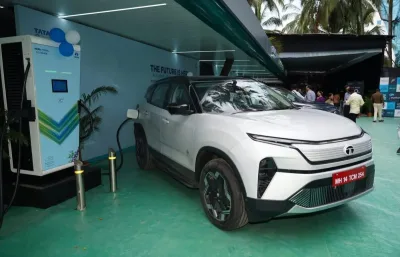
Both Mahindra XEV 9e and Tata Harrier EV provide great performance and are built on dedicated EV platforms. But each Electric SUV has its own strength which is discussed below:
Mahindra XEV 9e
Mahindra XEV 9e is based on the INGLO electric platform and uses a large 59kWh and 79kWh battery pack in a rear wheel drive (RWD) configuration. The SUV is powered by an Interior Permanent Magnet Synchronous Motor (IPMSM).
The 59kWh version of the battery pack provides 170 kW (231hp) with 380 Nm of torque, while the 79kWh produces 210 kW (286 hp) of power with the same torque. One of the standout features is that the large battery variant of Mahindra XEV 9e can accelerate from 0 to 100 km/h in just 6.8 seconds.
Tata Harrier EV
Tata Harrier EV is based on Tata Motors’ acti.ev+ architecture and is built with 65kWh and 75kWh battery pack options. Tata Harrier EV’s dual-motor QWD version delivers a combined output of 313 PS and 504 Nm of torque and provides amazing traction and performance.
Buyers can opt between Rear Wheel Drive (RWD) and Quad Wheel Drive (QWD/AWD) variants. Tata also states that the Harrier EV can accelerate from 0-100 km/h in just 6.3 seconds, making it one of the fastest SUVs in Tata’s lineup.
Interior and Technology
Both SUVs feature premium cabins packed with modern technology.
Mahindra XEV 9e

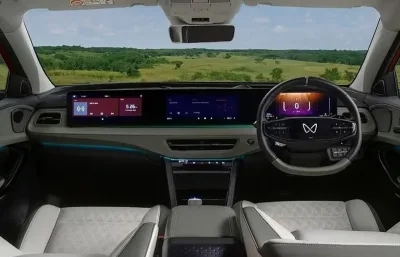
Highlights include:
- Triple-screen dashboard
- Premium digital cockpit
- Connected car technology
- Wireless smartphone connectivity
- Advanced driver assistance features
- Premium interior materials
- The cabin feels futuristic and technology-focused.
Tata Harrier EV
The Harrier EV offers:
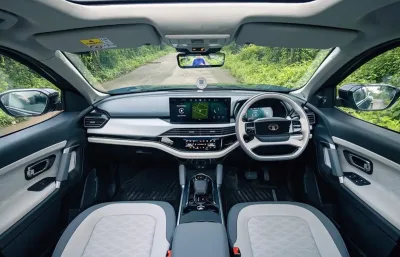
- Large infotainment touchscreen
- Fully digital instrument cluster
- Connected vehicle technology
- Premium upholstery
- Multi-zone comfort features
- Modern interface with Tata.ev ecosystem
- The layout is cleaner and easier for users familiar with the Harrier lineup.
Space, Design and Practicality
Although Mahindra XEV 9e and Tata Harrier Ev are both advanced featured SUVs, but they serve different buyers, and here are the space, design, and practicality features:
Mahindra XEV 9e
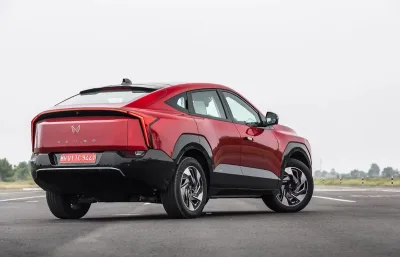
- Aerodynamic coupe SUV styling
- Large rear luggage compartment
- Practical 150L front storage (frunk)
- Spacious cabin due to dedicated EV platform
- Massive 663L boot space
Tata Harrier EV
- 502-litre boot
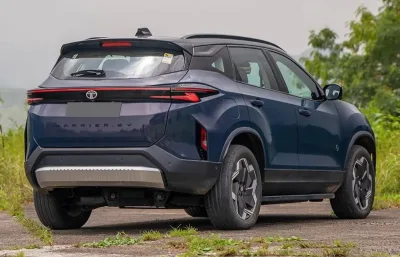
- Traditional rugged SUV design
- Conventional SUV seating position
- Better upright headroom
- Various off-road terrain modes
- Easier ingress and egress
- Water-wading capacity of 600 mm
Families may find the Harrier EV more practical, while buyers looking for modern styling may prefer the XEV 9e.
Also check- Mahindra XEV 9e vs Vinfast VF7 Comparison
Safety Features
Safety remains a priority for both manufacturers.
Mahindra XEV 9e
Safety equipment includes:
- Multiple airbags
- ABS with Electronic Stability Program
- Electric Parking Brake
- Advanced Driver Assistance Systems (variant dependent)
- Disc brakes on all wheels
Tata Harrier EV
The Harrier EV includes:
- Multiple airbags
- Electronic Stability Control
- Disc brakes
- ADAS features on selected variants
- Advanced driver assistance technologies
Both vehicles are equipped with the latest active and passive safety technologies.
Mahindra XEV 9e Pros and Cons
Pros
- Longer claimed driving range
- Futuristic dedicated EV design
- Premium digital cabin
- Rear-wheel-drive dynamics
- Advanced EV-first architecture
Cons
- Coupe roofline may not appeal to everyone
- No AWD option
Tata Harrier EV Pros and Cons
Pros
- Available with AWD
- Traditional SUV styling
- Strong performance
- Spacious cabin
- Practical family SUV
Cons
- Slightly lower claimed range than XEV 9e
- More conventional interior design compared to Mahindra
Which SUV Should You Buy?
Both the SUVs are excellent in all spheres and updated with the latest advanced technology, but you can specifically choose the Mahindra XEV 9e if you:
- Want the highest claimed driving range.
- Prefer a futuristic EV designed from the ground up.
- Like a technology-rich digital cabin.
- Enjoy sporty rear-wheel-drive dynamics.
Choose the Tata Harrier EV if you:
- Need an SUV with optional all-wheel drive.
- Prefer a rugged and practical design.
- Want a familiar SUV seating position.
- Frequently travel on mixed road conditions.
Final Verdict
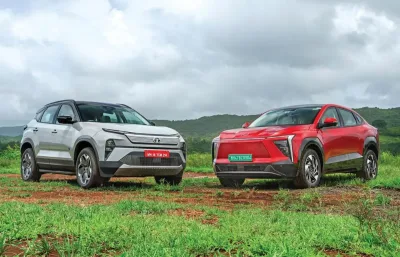
The Mahindra XEV 9e and Tata Harrier EV represent two different interpretations of a premium electric SUV. The XEV 9e stands out with its futuristic styling, dedicated EV platform, long claimed range, and technology-focused cabin. It is ideal for buyers who want an electric vehicle that feels completely different from a conventional SUV.
The Tata Harrier EV, on the other hand, offers the practicality of a traditional SUV along with powerful performance, optional all-wheel drive, and a spacious cabin. It is better suited for families and buyers who value versatility and confidence across different driving conditions.
Ultimately, your choice depends on your priorities. If cutting-edge design and maximum range matter most, the Mahindra XEV 9e is a compelling option. If you want stronger all-round capability with SUV practicality, the Tata Harrier EV is equally impressive. Both models showcase how far Indian manufacturers have progressed in the premium electric vehicle segment.