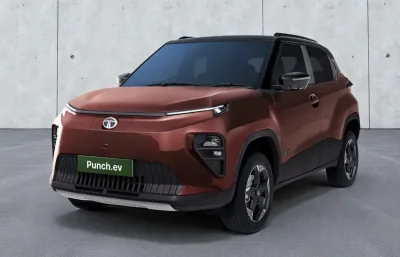
The CAFE III standards indicate a faster transition to electric vehicles in India.
The Government has released the latest draft notification on Corporate Average Fuel Efficiency III (CAFE III) 2027, which issues a clear policy shift towards faster EV adoption, especially in the passenger vehicle market, as stated by various reports.
According to the reports, the newly updated CAFE III framework provides tons of flexibility to original equipment manufacturers (OEMs) by providing compliance over three-year blocks instead of every year.
What are CAFE III Norms?
Corporate Average Fuel Efficiency (CAFE) are government regulations that set certain standards for the automakers to meet a specific level of fuel consumption or carbon dioxide emissions (CO2) across their entire fleet of vehicles sold in a year.
As per the draft notification published by the Ministry of Power on Thursday, the compliance will be evaluated over FY28-30 and FY30-32, thus giving car manufacturers extra time to implement EV launches.
The latest notification makes it crystal clear that the government's policies are formulated to accelerate EV adoption across the country while evaluating industry concerns.
CAFE III July 2026 Draft
The July 2026 draft has proposed various changes as compared to the September 2025 draft.
The super-credit for strong hybrid vehicles has been reduced from 2.0x to 1.6x, while the explicit 3g CO2/km concession available for small cars has been removed.
The government has also unveiled 12 new derogation technologies, each providing an advantage of lg CO2/km, with the total benefit limited to 9g CO2/km (0.3795L/100Km)
The report also mentioned that manufacturers failing to meet the prescribed standards are allowed to purchase compliance credits from Bureau of Energy Efficiency (BEE) at Rs 2,500 per gCO2/Km in FY28, with the pricing hiked to Rs 4,500 per g by FY32.
However, as per various reports, these changes can provide a disadvantage to various sub-scale OEMs which lack proper EV infrastructure and are increasing compliance risks for various automotive manufacturers.