EV Buyers and Consumer Rights in India: What to Do When Your Electric Car Has Repeated Problems
Quick Summary
Buying an electric vehicle is a major purchase and buyers are always hopeful that their EV will function correctly and after sale service will be smooth. However, if an EV continues to have the same fault despite multiple service centre visits then owners may be at a loss as to what course of action to take. Problems can arise such as ongoing repair issues, service centre backlogs and even warranty complications.
Recently in Hyderabad, a case was brought to a consumer forum which emphasised how consumers can challenge manufacturers where faults are not successfully rectified. In this blog, we discussed the EV Buyers and Consumer Rights in India, outline steps to take when continual fault problems occur and advise on both how best to communicate with a dealer/manufacturer and also how to lodge a consumer grievance should issues persist.
Hyderabad consumer forum case involving a defective BYD electric car
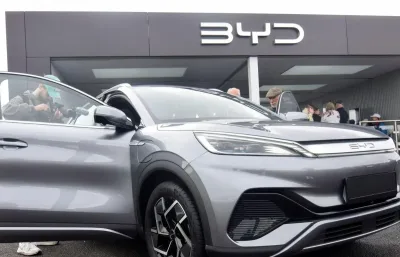
A BYD electric vehicle, bought for approximately ₹32.57 lakh by Akshat Greentech Private Limited, was the subject of a Hyderabad‘s consumer forum complaint. The company said it had experienced recurrent faults such as back suspension, aircon and steering issues. Furthermore, it stated that it had not received on time chargers along with additional benefits which had been promised. Despite servicing, these issues appeared to persist. BYD India and Mody BYD (the dealer) were instructed by the Hyderabad District Consumer Commission to get an independent expert report on the vehicle.
Once this was completed they were to carry out free-of-charge repairs to fix the vehicle’s problems. Warranty cover for both repaired and substituted items was also to be provided. Additionally, compensation of ₹25,000 and legal fees of ₹10,000 were to be awarded. However, the forum decided against requiring the consumer to either be given a cash refund or a substitute vehicle. It emphasised that specialist information would be required to assess if the vehicle contained an irreparable major fault. This highlights the importance of EV customers maintaining service histories and documenting ongoing issues.
What Counts as a Defective Electric Car?
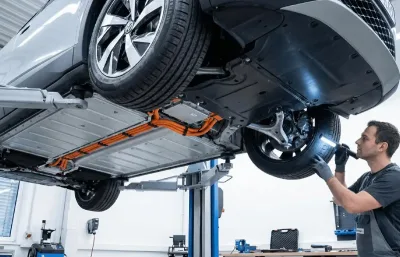
The large scale battery failure can constitute a fault, there are wider definitions of ‘defect’. Goods may be deemed defective if they do not confirm to an expected level of quality, quantity, strength, purity and standard as required by relevant legislation and contractual agreements. Poor service can also constitute a fault or lack of service quality. Possible faults for an EV may include:
- Persistent suspension and steering issues
- Unresolvable charging issues
- Air conditioning which ceases to function and does not operate as expected
- Persistent illumination of indicator lights and electrical faults;
- Items which fail during a vehicle’s warranty period
Vehicle attributes not corresponding to those specified in the documentation and express warranty.
While not all unusual noises or temporary software issues necessarily indicate a faulty manufacturing process, these may need investigation by a qualified professional or independent expert. Faults resulting from accidents, incorrect usage, unapproved alterations and non-compliance with the vehicle owner’s manual may also differ in nature to those arising from manufacturing and service provision. Again, this will depend on the facts and evidence of each case.
What EV Owners Should Do When the Same Problem Keeps Returning?
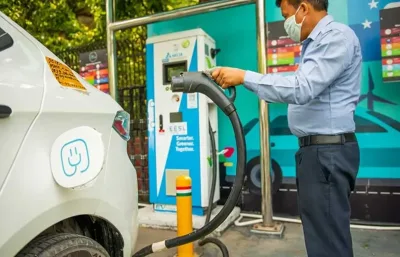
If a consumer identifies ongoing issues with an EV, there are a number of actions they may undertake prior to submitting a consumer complaint.
1. Submit a written complaint
Notify the approved dealer and manufacturer of the fault by email or via the official customer care website or other written medium. Outline the nature of the issue, when it began to occur and how frequently. In addition, detail whether or not the fault impacts on the safety or normal usage of the EV. For instance, rather than generically stating that an EV is not functioning correctly, a consumer might specify that there is persistent noise from the rear suspension when driving on uneven surfaces. Written complaints create an audit trail of when a firm has been notified of a vehicle fault.
2. Maintain repair/service records
Obtain a job card from a service centre each time an EV is serviced or repaired. Ensure that this specifies the nature of the fault. Retain copies of:
- Repair and job cards
- Service invoices and payment confirmations
- Warranties
- Emails or customer care complaint reference numbers
- Diagnostic reports and error messages
- Photographs and/or video footage of the fault
- Dates on which the EV was out of action.
When re-submitting a complaint, it is advantageous to reference a previously issued job card number in order to illustrate that the fault is continuing.
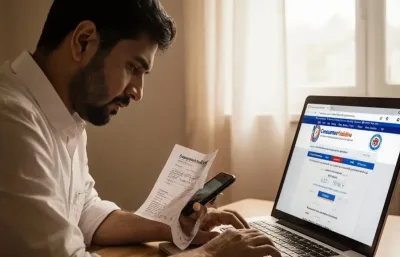
3. Obtain written diagnostic information
Should a service centre advise that the fault has been rectified, request information about the repair and what parts were replaced. If the fault persists, require a written analysis of why this has occurred and details of the planned repair. Should the company be unable to recognise the source of the fault, enquire whether it can organise further in-depth technical analysis. While oral assurances, such as “the issue will not come again”, may be given, documentation is typically of greater benefit in consumer disputes.
4. Allow the company an opportunity to address the issue
There is no universal guideline regarding how many repair attempts should be made before an EV must be replaced, factors such as the nature and severity of a fault, previous repair efforts and evidence will influence outcomes. Nevertheless, if a fault continues to recur despite numerous repair attempts, a consumer can write to an EV’s dealer and manufacturer requesting definitive action to be taken. Within the letter, a consumer should detail their complaint, repair history and desired remedy. Based on the issue in question, this may include suitable repair, substitution of faulty items, replacement and refund of the EV.
Also check: Repaired EV Safety Exposed | Insurance Scams & Accident Risks
Can EV Owners Request a Refund or Replacement?
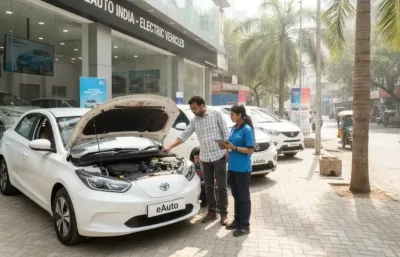
Although consumers can ask for a refund or replacement, there is no automatic entitlement to these. Consumer Commissions can order a variety of remedies for consumers including defect eradication, goods substitution, price refunds, service rectification and compensation where appropriate. The suitable remedy will depend on the nature of the fault and relevant evidence.
Typically, a partial fault which can effectively be repaired does not warrant whole vehicle replacement. Conversely, significant faults which cannot be resolved and which impact upon an EV’s usability and safety may underpin a stronger case for any result. Consumers should justify why a particular refund is suitable. For example, if a major fault has returned repeatedly, provide the job cards and technical reports showing the repair history.
How to File a Consumer Complaint Against an EV Company?
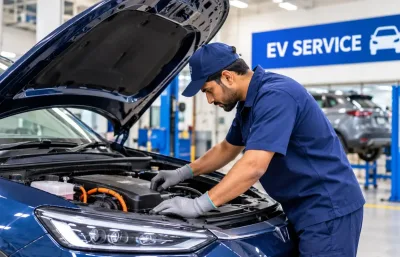
If a consumer is not satisfied with a dealer or manufacturer’s response to a complaint, they may wish to submit a consumer complaint in the following manner.
Step 1: Lodge a complaint with the National Consumer Helpline
This is a pre-court consumer redress facility operated by the Department of Consumer Affairs. Consumers can register complaints via:
- Phone – 1915
- Website – consumerhelpline.gov.in
- WhatsApp: 8800001915
Or by using the NCH or UMANG apps. The helpline relays complaints to the relevant company or authority and provides a docket number for reference. Although this is a valuable initial step, there is no definite assurance that a company will comply with a consumer’s requested remedy.
Step 2: Compile evidence for your complaint
Arrange consumer complaint evidence in chronological order. This may include:
- EV invoice and appointment information;
- EV warranty booklet
- Repair/service records
- Emails
- Diagnostic information
- Manufacturer’s reply to your complaint
In summary form, detail when the EV was acquired, when faults initially manifested and how many times it has been repaired. Then explain why the fault continues to exist. Finally, state what remedy you are seeking the commission to impose.
Step 3: Submit a complaint using the e-Jagriti portal
The Department of Consumer Affairs manages the e-Jagriti portal which allows consumers to electronically submit and monitor complaints. Visit e-jagriti.gov.in and complete registration and complaint submission procedures. Choose the fitting Consumer Commission according to both the monetary value of your claim and pertinent jurisdiction guidelines.
While not obligatory, consumers can elect to be accompanied by a lawyer when presenting their case to a Consumer Commission. The Department of Consumer Affairs’ FAQ on the Consumer Protection Act indicates that consumers can both personally or via a representative, submit and put forward complaints.
Which Consumer Commission should an EV owner approach?
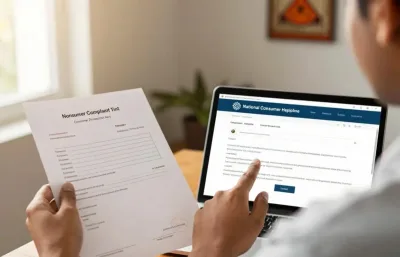
The value of the goods and services obtained determines which Consumer Commission a consumer should approach. This is set out in the Consumer Protection (Jurisdiction of the District Commission, the State Commission and the National Commission) Rules 2021.
| Consumer Commission | Value of goods or services paid |
| District Commission | Up to ₹50 lakh |
| State Commission | Above ₹50 lakh and up to ₹2 crore |
| National Commission | Above ₹2 crore |
Usually, a consumer who has spent ₹18 lakh on an EV would engage with the District Commission. Again, other legal criteria must also be considered. Generally, consumers can submit complaints to a Consumer Commission in the area where they live or work and where the opposing party operates a business. Moreover, consumers can electronically submit complaints to a Consumer Commission which has jurisdiction in the area where they reside and work, as confirmed by the Department of Consumer Affairs.
How Much Time Does an EV Owner Have to File a Complaint?
Typically, complaints should be submitted within two years of a consumer’s ‘cause of action’ arising (Section 69 of the Consumer Protection Act 2019). However, a commission may allow a consumer to submit a complaint beyond this two year period if the consumer can demonstrate valid reasons for the delay. The commission will also document its decision to permit late submission.
While consumers should not automatically believe that the two-year time frame is extended due to multiple repair attempts, it is preferable to consult legal professionals and submit complaints to the relevant Consumer Commission as soon as practicably possible if a fault is not satisfactorily addressed.
Does the Consumer Protection Act cover EV battery defects?
Yes. Depending on the facts, consumer legislation can apply to faults with an EV’s battery and other components. Indeed, the Act contains product liability provisions. Should a product contain manufacturing, design, manufacturing specification, express warranty and appropriate instruction and warning inadequacies, a manufacturer may be held liable for product liability. Product liability differs from standard warranty claims as it relates to damage occasioned by a faulty product.
Specific legal conditions must also be fulfilled. Importantly, the Act’s definition of damage for product liability does not solely embrace physical product damage and all economic loss. With regard to battery related complaints, consumers should retain diagnostic information, battery health data and charging information. In addition, documentation from a service centre may also be valuable in ascertaining whether a fault is attributable to a manufacturing problem, inappropriate usage, damage or another factor.
Can a Business Owner File a Consumer Complaint for an Electric Car?
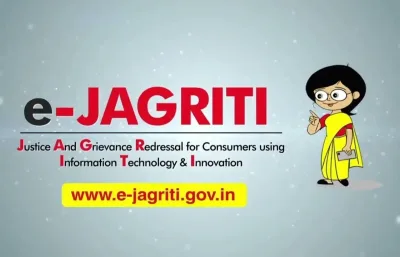
Those buying EVs in a business name should note that, with limited exceptions (for example, where goods are solely utilised to generate income via self-employment), goods utilised for business purposes are generally not regarded as being obtained by consumers under the Consumer Protection Act. Consequently, a person generally cannot submit a consumer complaint for goods and services acquired for business use.
Thus, depending on how an EV has been acquired and used, the legal position for a business owner may differ to that for someone who has obtained a car for their family.
While the Hyderabad case had a business complainant, the associated ruling should not be taken as meaning that all business acquisitions are automatically deemed to be consumer complaints. Those in a comparable position should obtain legal advice to determine whether they satisfy the definition of a consumer.
Also check: Electric Car Buying Truth Explained | Who Should Buy an EV?