How Do Electric Cars Perform on Hills and Mountain Roads?
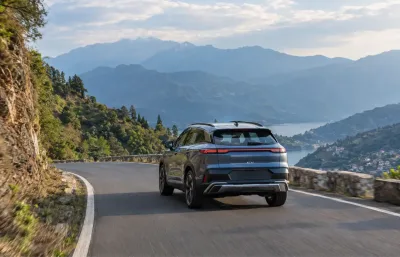
Electric cars can do a decent job on hills and mountain roads, providing smooth acceleration, excellent low-speed torque and a quiet ride. Their performance is determined by a variety of factors, including motor output, battery size, tyre grip, road conditions and driving style. However, mountainous terrain comes with its own set of challenges.
For example, climbing consumes more battery power, while recharging opportunities may be scarce in remote areas. Meanwhile, downhill sections can be used to recover some of the electricity, but they cannot compensate for the energy required on the ascent. For those planning a trip to mountains, understanding these differences could make the drive a safer and more relaxing one.
How Electric Cars Handle Steep Climbs?
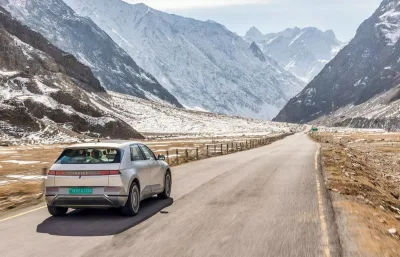
One of the significant strengths of electric cars is their ability to deliver strong torque at low speeds. This torque has a direct bearing on the car's ability to climb steep inclines and negotiate sharp bends. Unlike petrol and diesel cars, most electric vehicles do not need to rev their engines or shift gears to deliver this low-end torque. Instead, electric motors provide strong and smooth acceleration, making them ideal for hilly roads. This is especially important on mountain roads, where one often encounters steep gradients, slow-moving traffic and many sharp turns. However, performance varies depending on the model.
A small electric hatchback and a powerful electric SUV will exhibit markedly different characteristics when climbing a steep incline carrying several passengers and a load of luggage. Motor power, grip and the vehicle's overall weight all play an important role. The most crucial consideration is to choose an EV that has enough power to perform well under the conditions one typically drives in, especially if one regularly transports luggage or passengers.
Also check: EVs Vs Elevation | How to Drive your EV on Mountains?
How Uphill Driving Affects EV Range?
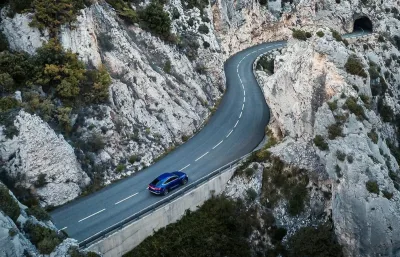
Climbing a mountain consumes more battery power. The motor has to work harder to overcome gravity, and therefore requires more energy than it would on a level road under identical conditions. Mahindra's official electric SUV owner manuals make this a significant consideration. One of them estimates an impact of 20-25%, depending on the incline and length of the climb.
This is a model-specific estimate, and not one applicable to all electric cars. The actual range will vary depending on the various factors, steepness and length of the climb, vehicle load, driving style, weather, climate control, and more. For instance, an EV that has a given range on a flat road will typically travel shorter distances on a route with long and steep ascents. Before embarking on a mountain road trip, it is wise to estimate the range for the route and the return journey and ensure that there is enough battery left to reach the next charging point.
Regenerative Braking Helps on Descents
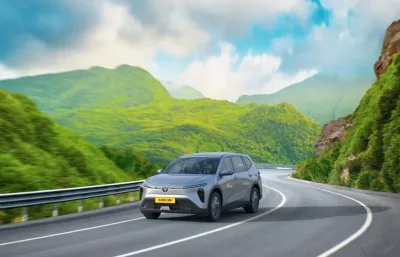
Regenerative braking enables an electric car to recover some energy when slowing down or travelling downhill. The electric motor acts as a generator, partly converting the vehicle’s kinetic energy into electricity which is stored in the battery. It can improve efficiency and reduce wear on conventional brake pads and discs. However, energy recovery depends on the vehicle, the charge level and temperature of the battery.
A full or cold battery may limit regenerative braking, while some of the vehicle’s energy is inevitably lost on the way down. Therefore it cannot fully compensate for the electricity used during uphill driving. When going down steep roads, drivers should maintain a safe speed, select an appropriate regenerative braking setting and use the conventional brakes whenever necessary. Regenerative braking should support safe braking, not take its place.
Battery Capacity and Motor Power Matter
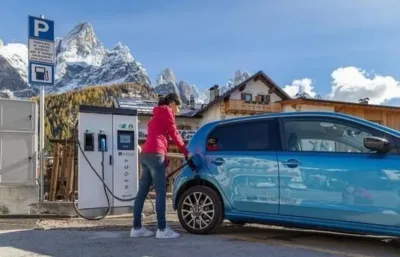
Not all EVs are equal in their ability to handle mountain roads. Differences in battery capacity, motor power and vehicle weight all contribute to a vehicle's overall performance on such roads. A vehicle with a larger battery may provide an advantage on long climbs, but it does not guarantee that it will achieve a higher real-world range. A heavier vehicle will require more energy to climb, and a more powerful motor does not automatically offer higher efficiency. When comparing EVs for frequent hill driving, one should consider the following elements:
| Feature | Why it matters |
| Battery capacity | Determines how much energy is available for the journey. |
| Motor power and torque | Affect acceleration and the ability to maintain progress on steep climbs. |
| Traction control | Helps manage wheel slip on loose or slippery surfaces. |
| Ground clearance | Matters on uneven roads, potholes and rough approaches. |
| Braking systems | Support controlled slowing on long descents. |
| Thermal management | Helps the battery and motor operate within their designed temperature limits. |
All-wheel drive can improve traction on some slippery or loose surfaces, but it does not guarantee better grip in every situation. Tyres, road conditions, speed and driver inputs are also important considerations. Likewise, a vehicle with high ground clearance may be more suitable for rough roads, but it should not be treated as an off-road vehicle unless its design and capabilities support that use. Choosing an EV based on the actual routes one intends to drive is more important than focusing on battery size or power figures.
Weather and Temperature Can Affect Performance
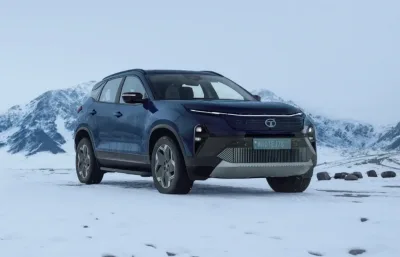
Mountain weather can be highly variable, particularly at higher altitudes. Cold weather conditions can impact regenerative braking and the ability to charge efficiently until the battery reaches a suitable operating temperature. Rain can also reduce grip and impact energy recovery during deceleration. Heating the cabin in cold weather may increase electricity consumption.
Similarly, battery and cabin cooling in extremely hot conditions can also use additional energy. These factors become more important when combined with steep inclines, heavy traffic and long journeys. A route that is straightforward in mild weather conditions may require additional consideration in the cold or rainy season. An electric car's weight and electronic traction systems do not eliminate the risk of slipping.
Tips for Driving an Electric Car on Mountain Roads
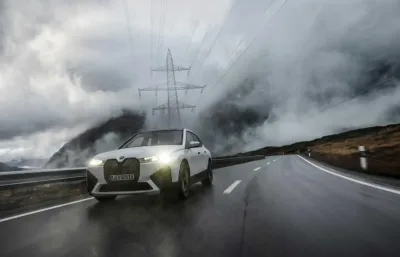
Driving an electric car on mountain roads comes with its own set of challenges. The steep inclines, winding roads, variable weather conditions, and lack of charging infrastructure can make these journeys more difficult than on regular roads. Here are some tips to make your way up the mountain stress-free:
Plan your route and charging schedule: Research and note down the location of all charging stations along the route. Confirm the availability of slots at these stations and have an alternate one in case your first choice is full.
Keep the battery charged: Ideally, one should keep an extra battery to be charged while using the other one in case of emergency situations. Always remember that uphill drives consume more power and the range of the battery reduces due to traffic, diversions, and waiting at traffic lights..
Drive steadily uphill: Avoid sudden acceleration on inclines and while taking bends. Reduce speed in advance before negotiating bends or curves. Keep a safe distance from other vehicles and pedestrians and always watch out for animals and oncoming traffic on narrow roads.
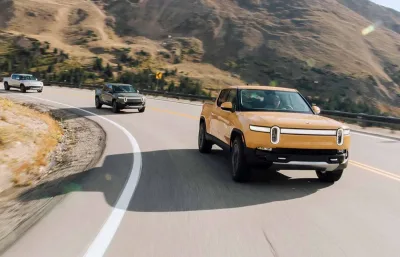
Do not depend solely on regenerative brakes: While driving downhill, reduce the speed by applying brakes at appropriate intervals. Set the level of regeneration for downhill as per the recommendation of the manufacturer.
Check the tyres and brakes: Check your tyres' pressure, tread, and overall condition, the condition and performance of your brakes, and the vehicle's lights and warning indicators. Tyre grip and good brakes are mandatory on hilly and twisty roads.
Be prepared for bad weather: Reduced visibility due to rain or fog and extreme temperatures can reduce battery efficiency, range, and power. Always check the weather forecast before setting out on such a drive. If snow or ice is expected, it is best to refrain from driving unless the vehicle and tyres are suited to these conditions.
Always refer to the EV's owner's manual for detailed information on driving an electric vehicle on steep gradients, inclines, and declines. Following these guidelines will certainly make driving an electric car on hilly roads easier.
Are Electric Cars a Good Choice for Mountain Driving?
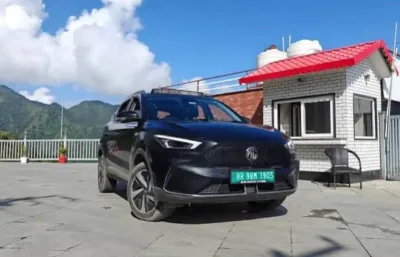
Electric vehicles can be a great choice. On the mountains, their regenerative braking and smooth torque is a great advantage. However, uphill sections will drain the battery, and charging stations are a luxury in many mountainous areas.
If you're visiting a hill station, an EV is a great option with some planning and keeping the battery topped up. If you're frequently traveling in mountainous areas, you might want to research the range of the vehicle, torque, ground clearance, grip, brake capacity and charging opportunities. It's important to prioritize based on your needs, and not get tricked by the maximum range of a car, particularly in difficult conditions.
Also check: Top 10 Best EVs with longest claimed range in India