How to Find EV Charging Stations in India: Apps, Maps, and More
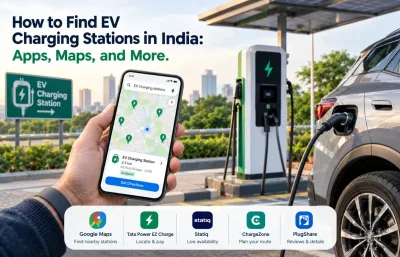
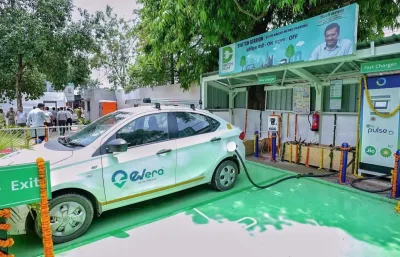
Finding EV charging stations in India has become more accessible than ever before with the rise of public charging stations and mobile apps. Whether you own an EV or an electric scooter, you can use charging station locators and digital maps to find a charging point that best suits your requirements within your local area, office premise or on the go.
But identifying an EV charging station is only half the task. You also need to evaluate whether the charger is compatible with your vehicle, whether it is readily available at the moment, how much it may cost to charge your vehicle and whether the EV charging point is easily accessible for you upon arrival. In this guide, we have discussed everything about EV charging stations in India.
Use Google Maps to Find EV Charging Stations
Google Maps is one of the easiest ways to search for public charging stations. This is helpful in case you have not subscribed to any particular charging network and just need a charging station near you. Here are the steps to find a charging station using Google Maps:
- Open Google Maps on your mobile device
- Search for EV charging stations near me
- You will be able to see a list of charging stations on the map
- You can select a station and load more info like the address, directions, extra information, and reviews
- Compare other nearby stations and pick the most suitable one for you
- You can also search for EV charging stations in a particular city or on a particular route.
For example, you want to search for EV charging stations on the Delhi-Jaipur route. This helps you find charging stations ahead of time so you can prepare accordingly for your trip.
Check the charger plug type on Google Maps
Google Maps allows you to search by car plug type if this feature is enabled in your region and if you have an updated version of the Google Maps app. This lets you choose the car model you have in the vehicle settings and view EV charging stations that are compatible with your plug type. This is helpful because not all chargers are compatible with all cars.
Note: Google Maps is a discovery tool for finding EV charging stations, it does not always show the most up-to-date information. So always confirm with the charging station operator in advance.
Best Apps to Find EV Charging Stations in India
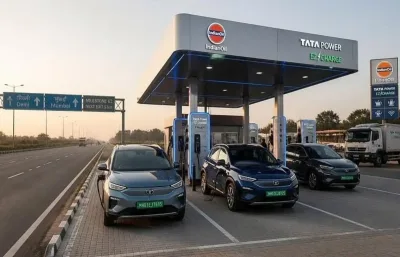
Dedicated EV charging apps can offer more specific information than a general navigation map. Here are some useful ones for Indian EV owners.
1. Tata Power EZ Charge
Tata Power EZ Charge offers a charging station locator and app-based access to its public charging network. Its app lists charging locations and offers features such as online payments, booking where available, and trip planning. It is useful for drivers looking to locate Tata Power charging points before travelling.
2. Statiq
Statiq offers an EV charging network and app-based charging services. Drivers can utilise its platform to discover supported charging locations and check the details available for individual stations. It can be useful when looking for public charging options in cities or on selected travel routes.
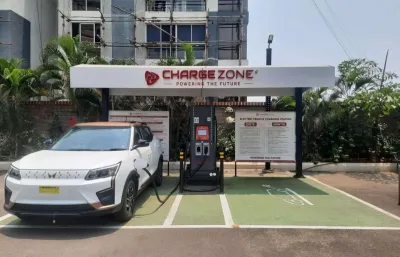
3. ChargeZone
ChargeZone operates EV charging infrastructure and offers an app to help users discover and access its charging points. It is worth checking when planning journeys that may involve higher-power charging stops. Before visiting, verify the specific station's connector, charging power and operating status.
4. PlugShare
PlugShare is a charging station discovery platform that helps EV drivers discover charging locations on a map. Depending on the listing, users may also discover connector information, photographs, reviews and reports from other drivers. These details can help you evaluate a station prior to visiting, especially when travelling outside your usual area.
Also check: Indian Railways Set to Introduce EV Chargers at Stations
Government Websites to Find EV Charging Stations
Besides private apps, one can also look up government resources for information on public EV charging stations in India. The Bureau of Energy Efficiency (BEE), under the Ministry of Power, keeps a record of information on public EV charging stations. Their website contains guidelines on EV charging infrastructure, as well as a published list of public charging locations. Additionally, one can check:
- EV Yatra Web Portal & mobile application: Launched by Bureau of Energy Efficiency to locate, navigate & book slots at public charging stations across India for EV users.
- Tata Motors: EV charging point locator
While the list published by the BEE can be a useful resource, a published list of charging points may not always be as up-to-date as a private company’s application. It is best to check with the operator for the latest information.
How to Find the Right EV Charger For Your Vehicle?
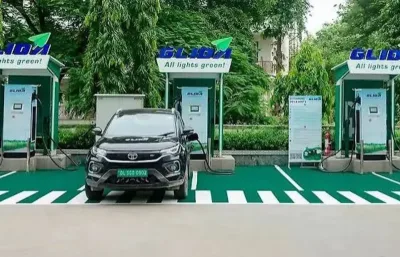
Apart from being close to you, the charging station should also be the correct type for your vehicle and have an acceptable power level.
Check the connector type
Most electric cars sold in India use the CCS2 standard for DC fast charging and the Type 2 connector for AC charging. For scooters and motorcycles, India formalised IS17017 (Part 2/ Sec 7) as the unified standard for light EVs (LEVs like e-scooters and e-3Ws), combining AC and DC charging for 2W/3W vehicles into a standardised combined connector. Always check your car’s owner’s manual or the manufacturer’s website before charging to ensure that you are using the correct charging station.
Check the charging speed
Most public charging stations offer chargers that have a certain power level. This depends on the car’s battery and the battery’s level of charge.
| Charger type | Best suited for | What to expect |
| AC charging | Longer stops, workplaces and some public parking locations | Usually slower charging |
| DC fast charging | Highway stops and quicker top-ups | Generally faster charging, if supported by the vehicle |
| High-power DC charging | Compatible EVs on longer journeys |
Can reduce charging time, depending on vehicle limits |
While higher power levels usually mean shorter charging times, it is also dependent on the car’s maximum charging speed. If the car only supports up to 50 kW of DC charging, it will not be possible to charge it any faster, even with a 150 kW charging station. So, before heading to a charging station, it is best to check both the type of connector and the power level in the application.
How to Check Whether an EV Charging Station is Available?
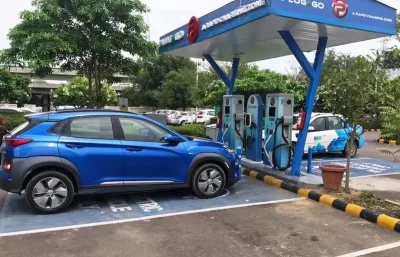
A charging station may appear on a map even if its charger is occupied, out of service or temporarily inaccessible. This is why checking availability is an important step. Follow these checks before leaving:
- Open the charging operator's app: Look for the station's latest status, if live information is available.
- Check individual charging points: A station may have several chargers, and not all of them will necessarily be free.
- Check operating hours: Some charging points are inside shopping centres, hotels, offices or parking facilities with restricted access.
- Review recent user feedback: Reports or photographs may help you identify access problems or chargers that have not been working.
- Call the operator if necessary: For an important highway stop, confirm the station's status when the app does not provide reliable information.
Some charging networks also offer booking features at selected locations. If advance reservations are supported, check the booking terms and arrival window. Remember that live status can change between the time you check the app and the time you arrive. For longer trips, identify an alternative charging station nearby.
For highway journeys, plan your charging stops in advance, keep a backup station along your route and maintain enough battery charge to account for traffic, weather and unexpected delays.
How Much Does it Cost to Charge an EV from a Public Charging Station?
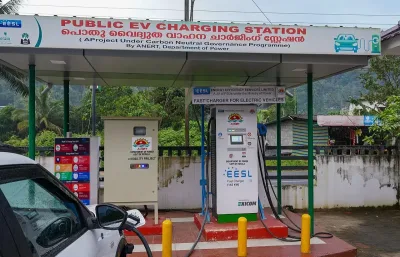
The cost of charging an electric vehicle in India is determined by the operator, location, charger type, electricity tariff, type of vehicle, and applicable service fees. Some networks have the prices published in their applications, while the others show the final amount payable when selecting a charging point or at the end of the charging session. There is no common price list that can be used as a reference across all public charging stations. Prior to charging make sure you understand the following:
- Price per unit: The applicable price per 1 kWh of electricity used for charging.
- Additional fees: Any service charges, parking fees, taxes or other applicable additional costs.
- Idle fees: Whether operator charges for keeping the vehicle plugged in when the session is over.
- Payment options: Whether the station accepts payments through an app, UPI, RFID cards or other payment methods.
- Minimum charges: Any minimum charges or special conditions applied by the operator.
For example, if a charger charges ₹18 per 1 kWh and your vehicle has used 20 kWh battery during a session, the energy-based charge would be equal to ₹360, excluding any additional fees. This is just an example, as there is no standard tariff for EV charging in India. By checking the prices before you charge you can estimate the cost and ensure that you will not be surprised by a high bill at the end of a session.
What To Do If You Cannot Find a Nearby EV Charging Station?
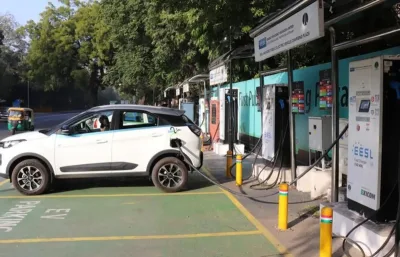
If your initial search did not yield any results, try a few more times before giving up and adjusting your plans. Try a different application: a charging station may be available in one app but not the other.
- Widen the search radius: Check if there are any charging points in commercial centres, shopping malls, hotels, car parks or along the road.
- Search for an operator by name: If you know that a specific operator provides charging stations in the area, you can try searching in their application or on their website.
- Your car manufacturer's portal: Some manufacturers offer their own charging point discovery solutions.
- Ask the operator: Even if a charging point is listed as available, it may have specific conditions or only be available to registered users.
If there are no public charging points available near you, do not attempt to use a standard household socket at a business or private residence - always use a charging arrangement recommended by the vehicle manufacturer and observe the safety instructions given by them.