Renault Introduces the next-gen Duster with a strong-hybrid engine powering a 1.4 kWh battery
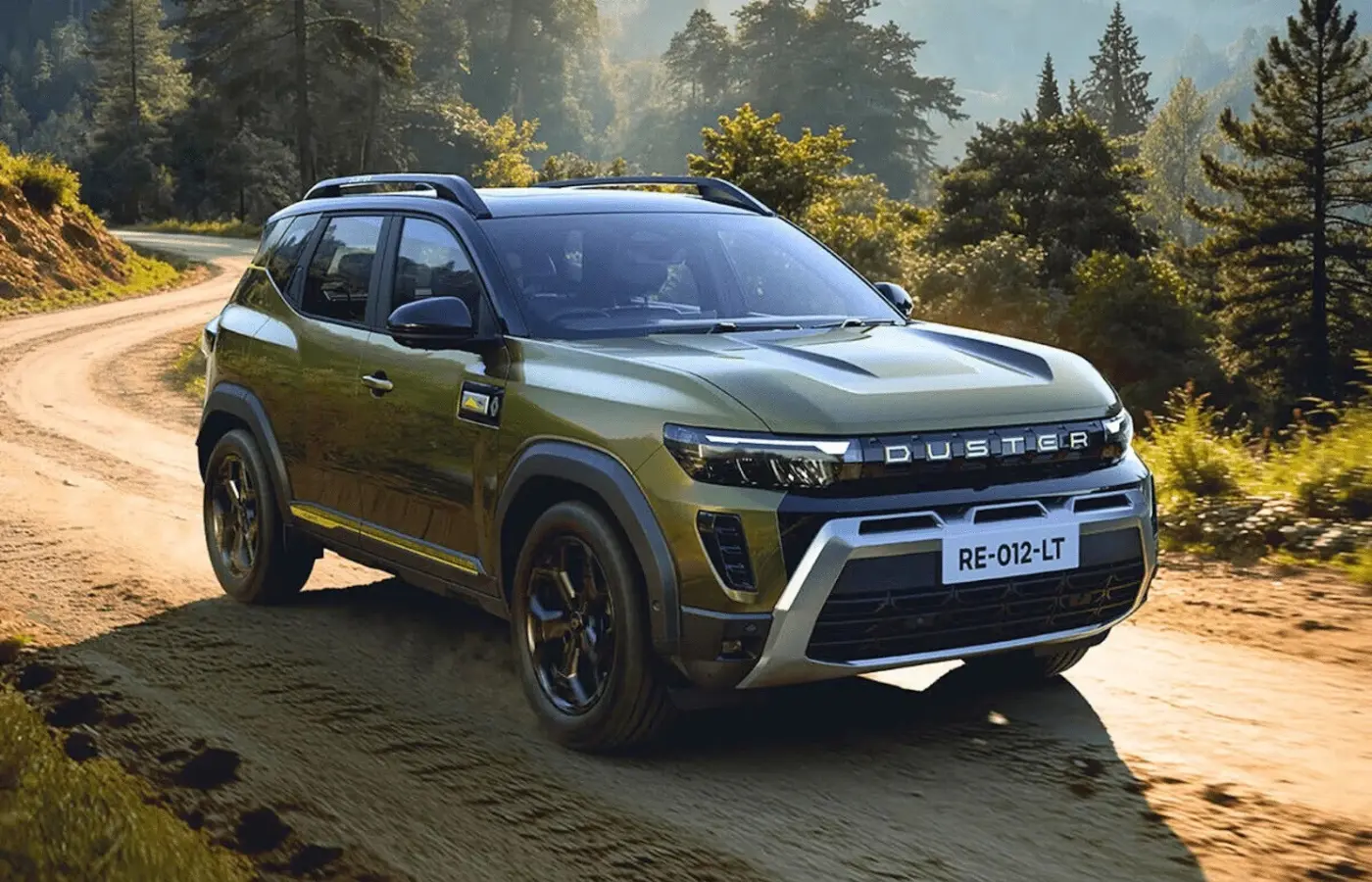
Renault has finally introduced its next-generation Duster, which will be going against the likes of Tata Sierra, Hyundai Creta, and recently launched Kia Seltos. Renault has also confirmed that they will be launching a strong-hybrid engine, all set to be launched this festive season.
Renault has self-developed this system and defined it as the E-Tech system. The company states that they have taken inspiration from Formula 1 to design this new hybrid system.
Renault Duster Strong-Hybrid Engine Technical Details
POWER: The Strong-Hybrid engine comes with a 1,789 cc four-cylinder petrol engine integrated with two electric motors, a 20 HP unit as a generator and a 49 HP motor sending power to the wheels. The car produces a combined power output of 160 HP and a peak torque of 172 Nm, powered by a 1.4 kWh battery pack.
.webp)
The upcoming hybrid engine is codenamed as HR18, which has been developed as Horse Powertrain, which is a powertrain solutions company jointly owned by Renault and Geely, and has core expertise in hybrid systems and transmissions.
Renault E-Tech Hybrid System
The Renault’s E-Tech system is combined with a petrol engine and electric drive which includes a battery sending power to the wheels via multi-mode automatic gearbox. Competitors like Toyota, which uses an e-CVT and a power split device for a largely step-free driving experience, whereas Renault’s hybrid transmission uses fixed gear ratios and shifts according to speed and RPM changes.
This means that gear shifts are done by increase in engine RPM, just like the traditional automatic gearboxes, and users can also feel the gear changes by increase in speed. It also uses a larger 1.4 kWh battery pack as compared to Toyota’s smaller 0.76 kWh battery.
.webp)
Renault has also claimed that 80% of urban commutes will be done in pure EV mode only, as with full hybrid, majority of the efficiency is achieved from low-speed running, where the car is completely moving from electric energy. The regenerative braking keeps the petrol engine off, when it's not needed. However, the real efficiency is based on traffic conditions, speed, optimum temperature and driving style.

.webp)