Electric Scooter Charging Guide: Time, Cost, Methods and Tips
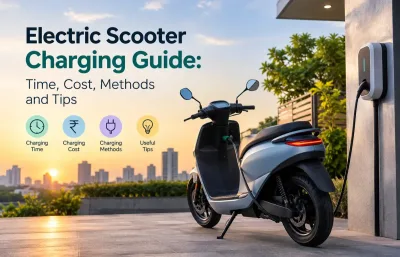
Electric scooters are making their way into the homes of many Indian commuters, providing convenience to many who want to avoid fuel costs on their daily commute. Before purchasing one, many are left with the question of charging. How long does it take to charge an electric scooter? How much will it cost? Can I charge it at home? Although this seems like a simple endeavor for some, there are a number of things that go into this, from the battery and charger of the electric scooter to what the manufacturer recommends. This electric scooter charging guide answers the commonly asked questions regarding charging electric scooters.
Various Ways To Charge An Electric Scooter
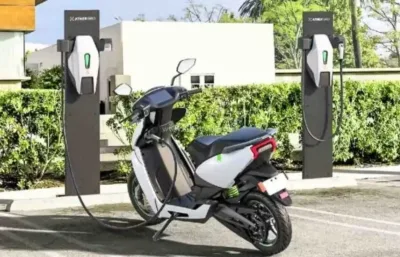
Depending on the scooter's design, the following methods can provide a charging solution for an electric scooter:
Home charging
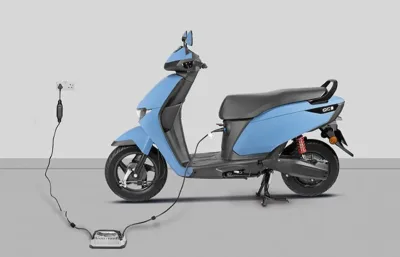
An electric scooter can be charged at home if the charging conditions are met, the parking space is available. Most electric scooters that are purchased with a home charger can be connected to an appropriate domestic power socket to charge, provided the manufacturer approves of this practice. The scooter can be charged after returning home from work or any other activity. This eliminates the need to visit a public charging station regularly.
Portable charger
Most electric scooters come with a portable charger that can be connected to a power socket when the need arises. The charger should have been approved for use with this particular scooter and have the correct voltage, current rating, and port.
Public charging stations
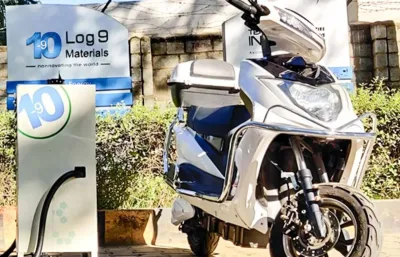
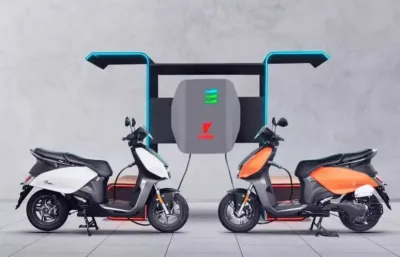
Public charging stations can be a convenient way to charge an electric scooter while away from home or on long journeys. However, not all public charging stations support the same electric two-wheelers, so it is essential to research the supported models before heading out.
Battery swapping
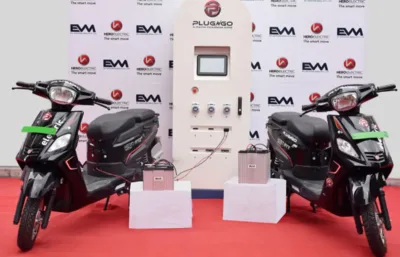
Some electric two-wheelers offer a battery-swapping option as an alternative to waiting for the battery to charge. In this method, a discharged battery is exchanged for a charged one at an appropriate swapping station. Battery swapping is an option only for supported electric two-wheelers and often requires a separate subscription or payment plan.
How To Charge An Electric Scooter At Home?
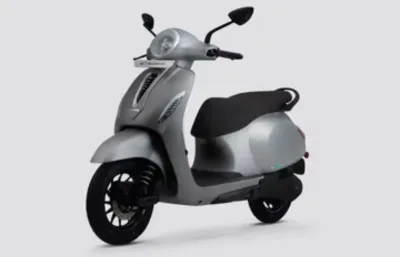
Charging an electric scooter at home typically follows these steps. The owner's manual is an essential resource that describes the recommended procedures, charger connection instructions, and model-specific considerations.
- Park the scooter: Park the scooter in a dry and well-ventilated area, away from water sources and combustible materials.
- Examine the charger: Visually inspect the cable, plug, connector, and socket for damage.
- Connect the charger: Connect the charger to the scooter in the specified order in the owner's manual.
- Check the charging indicator: Use the scooter's dashboard, charging indicator, or app (if available) to confirm that the charging process has begun.
- Wait for charging to complete: Follow the manufacturer's instructions and monitor the progress of the charging process.
- Disconnect the charger: Once the scooter has been fully charged, disconnect the charger as specified and store the charger properly. Avoid forcing a connector into a socket or using a damaged or overheated socket. If the charging process is often interrupted or the charger indicates an error, contact the service centre.
Also check: Electric Scooter Battery Fire | AIS-156 Tests & Safety Tips
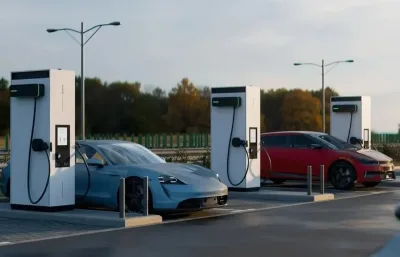
Can You Charge An Electric Scooter At A Public Charging Station?
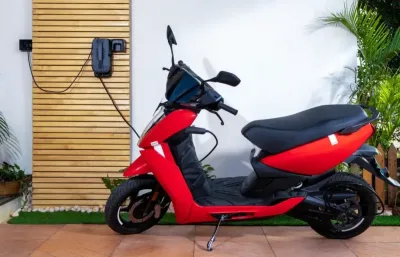
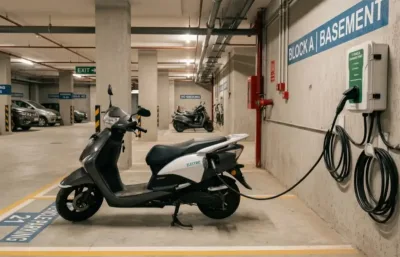
Yes, it is possible to charge an electric scooter at a public charging station, provided that it is compatible with the charging requirements of the scooter. The following considerations should be made before using a public charging station:
- Whether it supports electric two-wheelers
- Whether the connector and charging method are compatible with the scooter
- Whether a mobile application, account, or payment method is required
- Whether it is available when arriving at the charging station
- What the charging fees are
Not all public charging stations are compatible with all electric two-wheelers, so it is essential to ensure that the charging station can support the electric scooter before attempting to use it. Even if the charging station has been designed for use with electric cars, it does not necessarily mean that it will be compatible with all electric two-wheelers. Public charging is an excellent option for electric scooters with compatible connectors and is often a good option for longer journeys.
Electric Scooter Charging Cost In India
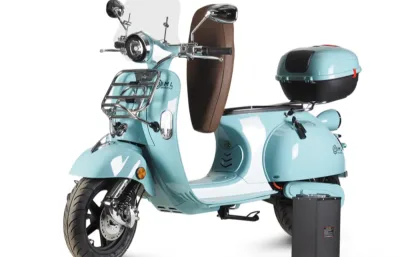
One of the significant advantages of owning an electric scooter is the ability to save money on fuel costs, compared to petrol vehicles. However, the cost of charging an electric scooter depends on the battery capacity, electricity tariff, and losses incurred during the charging process. The formula below can be used to estimate the cost of charging an electric scooter:
Charging cost = Electricity consumed (units) × Electricity tariff per unit
The electricity tariff (price per unit of electricity) depends on the electricity distribution company, and the electricity consumed will depend on the battery capacity and the charging efficiency. Electricity is measured in kilowatt-hours (kWh), and the electricity consumed during the charging process is often higher than the battery capacity due to inefficiencies during the charging process. The table below provides cost estimates for a ₹8 electricity tariff per unit and 10% electricity losses during the charging process.
| Battery capacity | Estimated electricity used | Approx. full-charge cost |
| 2 kWh | 2.2 units | ₹17.60 |
| 3 kWh | 3.3 units | ₹26.40 |
| 4 kWh | 4.4 units | ₹35.20 |
| 5 kWh | 5.5 units | ₹44.00 |
These are only approximate values that should be used as a guideline since the electricity tariff, battery capacity, efficiency, and electricity consumed during the charging process can vary.
How Long Does An Electric Scooter Take To Charge?
The scooter's overall battery capacity and the charger's power rating affect how long it will take to charge the scooter. Higher battery capacities take longer to charge, and higher charger outputs generally allow for shorter charging times. Meanwhile, the time needed to charge the battery to a certain level depends on its current level. Most electric scooters, for instance, take several hours to fully charge at home. The exact charging time can vary between different models, so it is best to refer to the manufacturer's specifications for an accurate estimate.
Charging time = Battery capacity in kWh ÷ Charger output in kW
For example, a 3 kWh battery charged using a 500 W charger will take more than six hours to fully charge since 3 kWh ÷ 0.5 kW = 6 hours according to this simple calculation. In reality, the charging time may be longer due to energy losses and variations in the charging speed across the charging cycle.
Can I charge an electric scooter faster?
An electric scooter can be charged faster using a higher-output charger, provided the scooter and its battery are compatible with it. Fast chargers are generally not recommended unless the manufacturer approves their use since they can damage the battery or pose a safety risk.
Tips to Maintain Your Electric Scooter Battery and Charge It Safely
Proper battery care and charge can prolong your electric scooter's battery life. A few simple steps can prevent potential hazards.
1. Use the recommended charger
Always use the charger that came with your scooter or a compatible charger recommended by the manufacturer. A charger unsuitable for your scooter can damage your battery or scooter
2. Avoid extreme temperatures
Scorching heat (common in Indian summer) and extreme cold can adversely impact your battery. Parking your vehicle in shaded and well ventilated areas (while charging) and adhering to temperatures recommended by the manufacturer for charging and storing your scooter is a good idea.
3. Always charge your scooter in safe conditions
Well ventilated and dry area, away from any combustibles. The area should be clear of any obstruction including doors and windows. The charging spot should also be free of any flammable material.
4. Check cables, connections, plugs, sockets
Before plugging in your scooter make sure that your charger, cable and plug are not damaged. Always make sure that connections are tight and free of dust or grime. Do not use your scooter or charger if your connections are faulty or wet. Avoid touching any electrical connections with wet hands or wet connections.
5. Always follow the recommended charging and storage instructions
Always follow the recommended charging limits and never leave the scooter charging overnight unless explicitly recommended by the manufacturer. Not all electric scooters have an auto shut off function so it is best to avoid such risks.
6. Pay attention to warning lights
If your scooter shows warning signs of battery or thermal misbehaviour, do not continue charging and stop using the scooter until you have had it checked by an authorized service center. If the scooter starts to emit smoke or smell burnt, it could be a sign of a faulty battery. In such a case immediately distance yourself from the scooter and get in touch with an authorized service center or contact emergency services.
7. Do not tamper with battery or charger
Do not attempt to modify or open up the battery or charger. Tampering with the battery or charger can be extremely dangerous. Let the professionals handle the battery and charger. Always follow the maintenance instructions provided by the manufacturer.
Also check: Can Minors Ride EV Scooters Without a Licence in India?