MG ADAPT: India's First Multi-NEV Platform, Features, Technology & Innovation
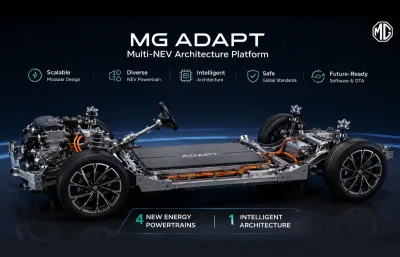
Electric vehicles have gained popularity in recent years, and the Indian automobile industry has undergone a drastic shift in innovation towards cleaner and smarter mobility. One more remarkable step has been taken by JSW MG Motor of India, as they introduced MG ADAPT (Advance Drive Architecture Platform Technology), which is India’s first Multi-New Energy Vehicle (Multi-NEV) architecture which is designed to support multiple electrified powertrain technologies on a single modular platform.
As the demand of the buyers continues to evolve and some buyers prefer fully electric cars, while some want the flexibility of hybrid or plug-in hybrid technology. Meeting all these needs, MG introduced a next-generation vehicle platform that will form the foundation for the company’s upcoming electrified vehicles. Here in this detailed article, we’ll discuss everything about the MG Adapt Platform.
Everything about Multi-NEV MG ADAPT Platform
MG ADAPT which stands for- Advance Drive Architecture Platform Technology is a modular vehicle architecture which is developed to support different types of electrified vehicles like electric cars, hybrid cars, and plug-in hybrids, without the need to create a completely new platform for each powertrain. In simple words, MG can use one flexible platform that accommodates them all. This modular approach and innovation simplifies vehicle development while giving the company greater flexibility to introduce new products as customer preferences and technology continue to evolve.
India's First Multi-New Energy Vehicle Platform
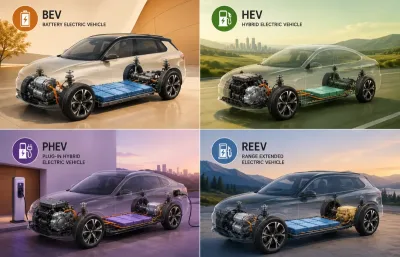
One of the biggest highlights of MG ADAPT is its ability to support four different electrified powertrain technologies on a single architecture. Here’s about the four of them:
1. Battery Electric Vehicles (BEVs)
Battery Electric Vehicles (BEVs) run entirely on electricity stored in a rechargeable battery pack. BEVs do not generate tailpipe emissions, and do not require diesel or petrol. It only needs to be charged using an external charging source. This BEVs technology is currently being used in car models like, MG Comet EV, MG Windsor EV, and more.
2. Hybrid Electric Vehicles (HEVs)
Hybrid Electric Vehicles combine a petrol engine with an electric motor. Unlike an electric car, an HEV does not need external charging because the battery is charged through regenerative braking and the engine itself. The electric motor mainly assists the engine to improve fuel efficiency and reduce emissions.
3. Plug-in Hybrid Electric Vehicles (PHEVs)
A Plug-in Hybrid Electric Vehicle is similar to a hybrid but comes with a much larger battery. The battery can be charged externally using a charging point. This allows the vehicle to drive on electric power alone for shorter distances before the petrol engine takes over when required.
4. Range Extender Electric Vehicles (REEVs)
A Range Extender Electric Vehicle is different from a conventional hybrid. In an REEV, the wheels are driven by an electric motor, while a small petrol engine functions only as a generator to recharge the battery when required, which helps to extend driving range while maintaining an electric driving experience.
MG ADAPT Powertrain: Advanced 10-in-1 Intelligent Drive Unit
One thing that sets the MG Adapt platform apart is its 10-in-1 Intelligent Drive Unit, which integrates multiple key powertrain components into an efficient and compact system. MG’s motive was to reduce complexity, improve overall efficiency, and deliver a smoother and better driving experience across different electrical powertrains. The highlight of the MG Adapt platform is that it is the world's first Electromagnetic Dedicated Hybrid Transmission (DHT).
MG Adapt platform delivers 98.8% transmission efficiency, which enables highly precise and efficient power management. Another standout feature of the platform is the first-of-its-kind electromagnetic e-clutch, which can easily switch between various driving modes in just 0.1 seconds. It’s approximately 4x faster than a conventional hydraulic clutch system, and this transmission monitors the vehicle’s speed and operating conditions to make sure of a seamless transition between power sources.
The MG ADAPT platform supports four intelligent drive modes, each designed to optimize efficiency and performance based on driving conditions. Here’s about each of them.
- Pure EV Mode: The vehicle is powered entirely by the electric motor, producing zero tailpipe emissions.
- Series Mode: The engine generates electricity, while the electric motor drives the wheels.
- Parallel Mode: The engine and electric motor work together to power the vehicle.
- Engine Direct Mode: The engine directly drives the wheels when it is the most efficient option, particularly during sustained high-speed driving.
Which MG Vehicle Will Be the First to Use the ADAPT Platform?
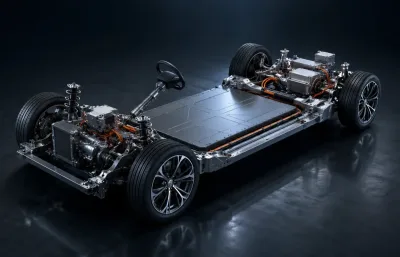
During the official technology debut, JSW MG Motor India Managing Director Anurag Mehrotra explicitly confirmed that the company will launch one battery electric vehicle (BEV) and one plug-in hybrid electric vehicle (PHEV) built on the ADAPT architecture within FY 2026–27 (by March 2027). Industry reports suggest that the first model underpinned by the MG Adapt platform could be the India-spec version of the Wuling Starlight 560.
Globally, the Wuling Starlight 560 is offered in both Battery Electric Vehicle (BEV) and Plug-in Hybrid Electric Vehicle (PHEV) versions. EV and PHEV are the two powertrain options which align with MG ADAPT’s Multi-NEV platform, which is designed to support multiple electrified technologies including BEVs and PHEVs on a single modular platform.
According to reports, the upcoming three-row SUV has been spotted testing on Indian roads several times over the past few months, suggesting that development is at an advanced stage. MG has also filed a design patent for the SUV in India in March 2026. Based on test sightings, the patent filing, and multiple industry reports, it is widely expected to become the inaugural vehicle built on the new platform for the Indian market
MG Adapt Platform Capabilities and Technology
MG Adapt platform has marked the entry for the innovation, here are soe of the features which sets it apart from others”
Connected and Future-Ready Technologies
Beyond its flexible structure, MG ADAPT has also been developed to support the next generation of automotive technologies. Modern vehicles increasingly depend on software, electronics, and connectivity, and the ADAPT platform is designed with these requirements in mind. The MG Adapt platform is capable of supporting the following:
- Connected vehicle technologies
- Advanced electronic architecture
- Over-the-air (OTA) software updates
- Next-generation infotainment systems
- Advanced Driver Assistance Systems (ADAS)
- Future software-driven innovations
These capabilities enable vehicles built on the MG ADAPT platform to receive software updates and new features over time without requiring major hardware changes..
Modular Architecture
One of the biggest strengths of the MG ADAPT platform is its modular and scalable architecture. Instead of developing a completely new platform for every vehicle, MG has designed ADAPT to accommodate different vehicle sizes and body styles using the same engineering foundation.
According to MG, this flexible architecture can support a wide range of electrified passenger vehicles, including, SUVs, Crossovers, Sedans, and other electrified passenger vehicles This modular approach simplifies vehicle development, reduces engineering complexity, and enables MG to introduce new models more efficiently while adapting to changing customer preferences.
Why Is a Multi-Energy Platform Important?
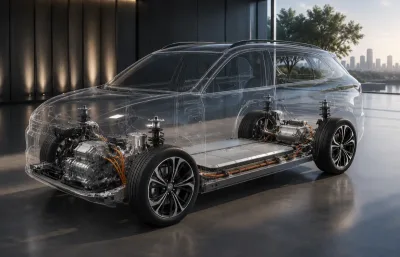
The transition to electric mobility is not the same for every customer. Some buyers have access to home charging and are comfortable with a fully electric vehicle. Others frequently travel long distances and may prefer a plug-in hybrid or another electrified solution.
By supporting multiple powertrain technologies on a single platform, MG can offer different types of vehicles while using the same engineering foundation MG Adapt Platform. According to MG, this improves flexibility and allows the platform to remain relevant as customer needs and technology continue to evolve.
Final Thoughts
India’s first Multi-NEV platform is not just a new vehicle platform, but it represents a new approach to building future-ready vehicles with more modern tactics. By creating a single modular architecture capable of supporting Battery Electric Vehicles, Hybrid Electric Vehicles, Plug-in Hybrid Electric Vehicles, and Range Extender Electric Vehicles, MG is laying the groundwork for its next generation of electrified products. The anticipation is high for the Wuling Starlight 560 to be the first vehicle built on the new platform for the Indian market.
While there is no confirmation of the news, MG has focused on introducing the ADAPT platform and its capabilities rather than revealing detailed technical specifications. As new MG models based on ADAPT are launched, we can expect more information about their batteries, performance, charging technology, features, upcoming ADAPT platform vehicles, and more. For now, it is officially stated that the MG ADAPT platform is designed to provide flexibility, scalability, and long-term support for multiple electrified powertrains, making it a significant milestone in MG's electrification journey in India.