India's Electric Bus Market in 2026: Growth, New Developments, Opportunities and Challenges
Quick Summary
India's EV market isn't just limited to cars and two-wheelers, electric buses are playing a key role in the shift to a cleaner public transport system in the country. With government support, mass procurement plans and greater involvement from local manufacturers, electric buses are slowly finding their place in India. Several developments took place in 2026, including BEST undertaking signing an agreement to add 1,500 electric midi buses to its fleet. Olectra Greentech will be launching its next generation electric buses in early 2027.
A report by CRISIL Ratings has suggested electric buses could account for 17% of all new bus registrations in the country next financial year. However, high upfront costs, charging infrastructure, battery issues, funding and slow deployment are still impacting the growth of the industry. Let's take a look at the latest news, government support, manufacturers and opportunities shaping the electric bus market in India in 2026.
India's Electric Bus Market: Latest Developments in 2026
The electric bus industry in India is growing because of government procurement and new product development. Here are some of the key happenings.
1. BEST Undertaking receives 1,500 electric buses
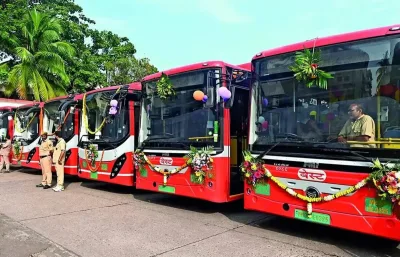
One of the latest news stories came from Mumbai. The Brihanmumbai Electric Supply and Transport (BEST) undertaking has signed an agreement to receive 1,500 new air-conditioned electric midi buses. This announcement, which was made in November 2026, is part of the city's move to improve public transport.
The new buses will improve connectivity between residential areas, rail stations and Metro transport. They are smaller so can be used on routes where larger buses would be harder to use. This is important as it shows that electric buses are not just being used for large routes. Smaller electric buses can also be used to improve public transport. This agreement shows Mumbai's continued move to use electric buses.
2. Olectra Greentech to launch next gen electric buses in 2027
Indian electric bus company Olectra Greentech will be launching a new range of electric buses in Q4 of FY2026-27 (Jan-Mar 2027). The news was announced in November 2026 during their quarterly earnings call. They will be focusing on increasing localisation within the buses. The new electric buses will be developed for the Indian and international market. Key stats from the company include:
- Over 8,000 orders for electric buses.
- Over 4,750 total electric vehicle deliveries.
- Over 750 million km travelled in their electric buses.
- 55 cities in operation.
No details were provided regarding the battery storage, range or pricing of these new buses. This shows that Indian manufacturers are moving forward with new generation electric buses.
3. 17% of new bus registrations to be electric buses
As per the CRISIL Ratings report released in October 2026, the electric bus segment is expected to witness a significant increase in share of new bus registrations in the country to around 17% in the next financial year from around 7% in the last financial year. Over 20,000 electric buses have been deployed in the country as of September 2026.
The order-book of the industry stands at around 29,000 buses, out of which around 75-80% are expected to be delivered. The report states that delays in setting up of charging infrastructure, upgrading bus depots and grid connectivity will impact the delivery of some of these buses. Thus, this shows that the demand for electric buses is expected to increase, but having infrastructure in place will be crucial for future growth of the industry.
Government Initiatives Supporting Electric Bus Adoption
Government schemes and funding are having a big impact on the growth of the electric bus industry in India. Two key schemes are being used to encourage the use of electric buses. These are PM E-DRIVE and PM-eBus Sewa.
PM E-DRIVE Scheme
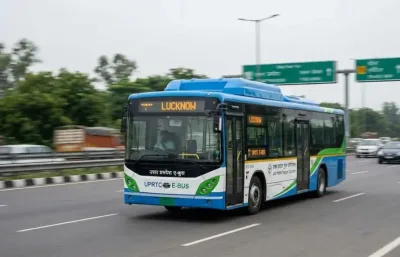
The scheme PM Electric Drive Revolution in Innovative Vehicle Enhancement (PM E-DRIVE) is helping improve the public transportation system using electric vehicles. The government has allocated ₹4,391 crore for this scheme. Under the scheme,14,000 buses have been allocated, which includes:
- 13800 Electric Buses under seven major cities including Delhi, Bengaluru, Hyderabad, Mumbai, Ahmedabad, Pune and Surat.
- 200 Electric Buses approved for deployment in hilly areas of Jammu and Kashmir.
These 13800 buses are being deployed in two phases. That is, 10900 buses under phase I and 2900 buses under phase II. This scheme aims to incentivize the public transportation bodies to use electric buses and boost local manufacturing.
PM-eBus Sewa Scheme
The PM-eBus Sewa Scheme is looking to improve public bus transport in cities. It will be used in areas where there is no organised bus service. It aims to deploy 10,000 electric buses across 115 cities. As of 13 October 2026, the progress includes:
| Parameter | Progress |
| Buses sanctioned | 10,000 |
| Cities covered | 115 |
| States and UTs | 26 |
| Buses deployed | 1,050+ |
| Operational cities | 28 |
| Cities with power infrastructure | 97 |
| Cities with civil infrastructure | 100 |
The scheme will also help with developing new depots and electricity infrastructure. A key feature of this scheme is that it will target smaller cities. Overall, these government schemes are creating demand for electric buses. This is encouraging manufacturers to get involved.
Top Electric Bus Manufacturers in India
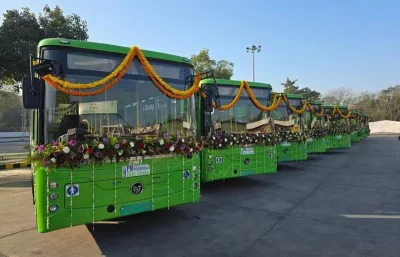
There are several companies in India who manufacture electric buses. These companies offer various electric buses for urban transport, intercity transport, school buses, and staff transport. Some top manufacturers and their electric bus options are listed below:
1. Tata Motors
Tata Motors have several electric buses in their portfolio including two main lines- Starbus and Ultra. Some of their key electric buses include:
- Starbus 4/12 EV: This is a 12 metre electric bus with a 400kWh battery. This can seat 17 or 35 people.
- Starbus 9/12 EV: This 12 metre electric bus has a 400kWh battery, and 245kW peak motor. It can seat between 37-45 people.
- Ultra 9/9 EV: This 9 metre electric bus has a 200kWh battery and can seat between 23, 31 and 34 people.
Tata Motors also have charging facilities and will help with fleet management. They have over 3600 electric buses in operation in over 20 cities.
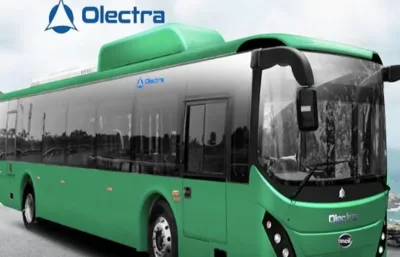
2. Olectra Greentech
This is a well-known electric bus manufacturer in India. Their electric buses are offered for urban transport, metro feeder services and staff transport. Their most notable electric bus is the V2 which is suitable for busy urban routes and staff transport. It has the following specification:
- Capacity: 16-24 Seaters.
- Motor: 180kW.
- Torque: 1500Nm.
- Range: Up to 150km.
- Charge Time: Approximately 3-4 hours.
- Battery: Lithium Iron Phosphate (LFP).
The bus has regenerative brakes, front and rear air suspension, ABS/EBS and live tracking. Olectra will be launching their next generation electric buses in early 2027 with increased localisation.
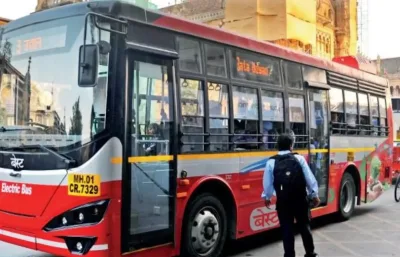
3. JBM Auto
JBM Auto has electric buses for urban, intercity, school and staff transport. Their main electric buses include:
- ECO-LIFE e12: This is a 12 metre electric bus for urban transport.
- ECO-LIFE e9: This is a 9 metre bus with a range of around 300km and seats up to 42 people.
- E-SKOOLIFE: This is an electric school bus.
- E-BIZLIFE: This is an electric staff transport bus.
- XPRESS: This is an intercity electric bus.
JBM also has charging facilities. They offer a complete package for electric buses including charging facilities. This makes them a key player within India’s electric public transport sector.
4. Switch Mobility
Switch Mobility manufactures electric buses in their EiV range. These electric buses are suitable for urban, intercity, school and staff transport. Some key electric buses include:
- SWITCH EiV 12: This 12 metre electric bus is available in standard and ultra low entry versions. It has a 235kW peak motor, modular NMC battery and range of up to 300km.
- SWITCH EiV 22: This is a double decker electric bus.
- SWITCH E1: This is another electric bus.
The EiV 12 has dual gun fast charging capabilities meaning it can be charged in approximately 1.5-3 hours. It also has a SWITCH iON system which allows for remote diagnostics, tracking and fleet monitoring.
5. PMI Electro Mobility
PMI Electro Mobility offers electric buses in a variety of sizes for urban transport, smaller cities, school transport and staff transport. They currently have the following electric buses:
- Urban 12M: This 12 metre electric bus has a 366.66kWh LFP battery, range of 250km and seats 36 people.
- Regio 9M: This 9 metre electric bus has a 151kWh battery and range of 150km.
- Lito 7M: This is a small electric bus with a 100.2kWh battery and range of 100km.
- Regio Staff: This is an electric staff bus with a 244kWh battery and range of 180-200km.
They also have electric school buses with a range of 130-150km. They have over 3300 electric buses in operation in 34 cities in India.
Why Is India Moving Towards Electric Buses?
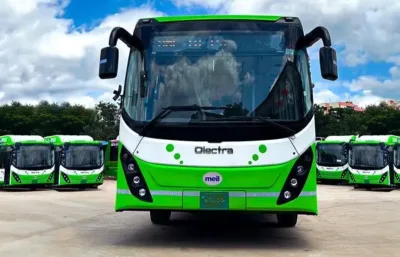
There are a number of reasons why companies are moving towards using electric buses.
Reduces air pollution in cities
Diesel buses cause more air pollution in cities. Electric buses do not emit tailpipe emissions when in use. This can help improve air quality in local areas. However, the overall impact depends on how electricity is generated and how the batteries are manufactured and recycled.
Lower running costs
Electric buses can be cheaper to run per km compared to traditional diesel buses. Electric buses have a simpler mechanical design which reduces the need for certain maintenance tasks. However, this depends on how much you pay for electricity, cost of replacing batteries, how much the buses are used and how much maintenance is required.
Quieter public transport
Electric buses are much quieter to use. This can improve the passenger experience and reduce noise from traffic in residential areas.
Reduced reliance on diesel
India is very reliant on importing crude oil. Electric buses that use electricity from various energy sources within India can help reduce reliance on using diesel in public transport.
Also check: Public Buses in Delhi will Switch to Electric in 3 Years
Challenges Facing Electric Buses in India
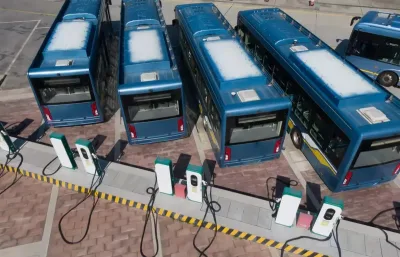
Despite government encouragement and increasing demand, there are several challenges facing the electric bus industry in India.
1. High Cost
Electric buses are an expensive option for state transport undertakings. The large battery, motor & power electronics make them much more costly. However, government subsidies and the GCC model can help.
2. Charging Infrastructure
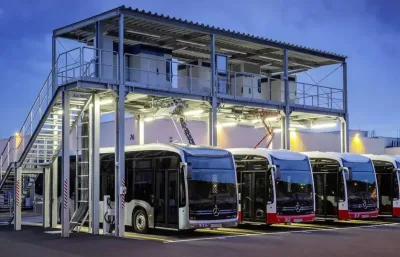
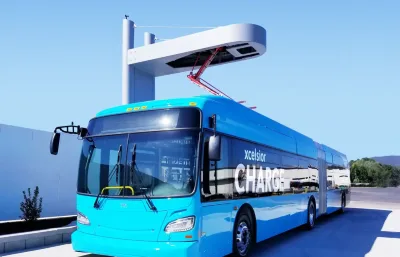
Electric buses will require charging infrastructure. Bus depots will require high capacity charging points, transformers, grid and electrical infrastructure. This can be an issue as it can take a long time to get everything set up. According to CRISIL it can take approximately 12 months to install grid and transmission infrastructure.
3. Battery & Range
As electric buses work on set routes, battery life can be affected. This can be due to heavy passenger numbers, traffic, air-con usage, very hot or cold temperatures and battery degradation. Transport authorities must be careful with choosing the right buses.
4. Funding and Payment Delays
Electric buses are mostly funded by private operators using the GCC. Transport authorities will pay them a set amount per km. Delays in payment can occur which can impact their financial position. This can be impacted by high interest rates and high running costs. The government has put in place a Payment Security Mechanism.
5. Limited Private Sector Adoption
Electric buses are mostly bought due to government schemes. There is not much take up in other areas such as schools, tourism, corporate and intercity transport. This is because of the high cost, difficulty in financing and charging infrastructure.
Electric Buses vs Diesel and CNG Buses
| Parameter | Diesel Bus | CNG Bus | Electric Bus |
| Energy source | Diesel | Compressed natural gas | Electricity |
| Initial purchase cost | Generally lower | Generally lower | Generally higher due to battery |
| Energy cost per km | High and affected by diesel prices | Moderate, affected by gas prices | Generally lower, depending on electricity tariff |
| Maintenance | Regular engine, oil, filter and transmission servicing | Engine and gas-system maintenance | Fewer moving parts; battery and electrical system maintenance |
| Energy efficiency | Lower | Better than diesel in some operating conditions | Higher drivetrain efficiency |
| Tailpipe emissions | CO₂, NOx and particulate matter | CO₂ and lower particulate emissions than diesel | Zero tailpipe emissions |
| Noise levels | Higher | Moderate | Lower |
| Refuelling/charging | Quick refuelling | Quick refuelling | Requires scheduled charging |
| Infrastructure | Widely available fuel stations | Requires CNG stations | Requires charging stations, depot upgrades and adequate grid connections |
| Operational suitability | City and intercity routes | City and intercity routes | Particularly suitable for predictable urban routes with depot charging |
Electric buses provide benefits with reducing local emissions and noise. However, diesel and CNG buses do provide benefits with quick refuelling. The right choice will depend on the route requirements, cost of operation, availability and infrastructure.
Future of Electric Buses in India
The electric bus industry in India is expected to grow. This is due to the government procurement programmes and manufacturers increasing their production. According to CRISIL, 17% of new registrations could go to electric buses in the next financial year. The next step will depend on:
- Improved battery technology: Improved battery energy density, faster charging and better thermal management can increase the range of the vehicles.
- Increased charging depots: Faster development of charging depots and grid connections will be key to turning the orders into live vehicles.
- Increased private sector: Electric buses could be used in corporate, airports, schools and intercity as funding and charging becomes more affordable.
- Increased domestic manufacturing: More localisation of battery packs, electric motors and power electronics can help boost manufacturing in India.
- Improved fleet management: Smart connected technology can help increase vehicle availability and reduce operating costs.