MG Hector Tomahawk Launched in India: PHEV Technology, ADAPT Platform & Competition
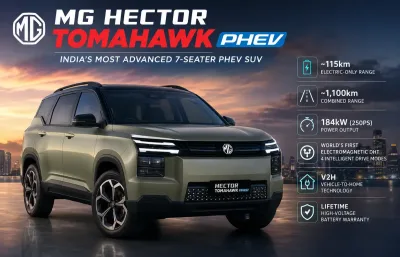
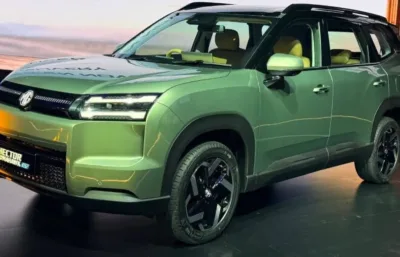
The wait is over as JSW MG Motor India has finally launched the MG Hector Tomahawk at a starting price of ₹19.49 lakh; a new take on the premium three-row SUV in India. The vehicle's PHEV technology and MG's new ADAPT multi-NEV platform are both worth considering for the launch. The Hector Tomahawk comes with both EV and PHEV technology, giving buyers two different approaches to electrification.
The PHEV is the more technologically interesting offering as it introduces MG's Electromagnetic Dedicated Hybrid Transmission plus four intelligent drive modes. MG claims its ADAPT platform has been developed to support EV, PHEV, HEV and REEV powertrains to form the foundation of its future electrified vehicles. We have discussed the launch of MG Hector Tomahawk in detail including features, ADAPT Platform, PHEV Technology, competition and more.
MG Hector Tomahawk Price in India
The Hector Tomahawk has been launched at the following introductory prices:
| Version | Seating | Introductory Price |
| Hector Tomahawk EV Excite | 7 seats | ₹19.49 lakh |
| Hector Tomahawk EV Exclusive | 7 seats | ₹21.99 lakh |
| Hector Tomahawk EV Essence | 7 seats | ₹23.49 lakh |
| Hector Tomahawk EV Essence | 5 seats | ₹22.99 lakh |
| Hector Tomahawk PHEV Exclusive | 7 seats | ₹25.69 lakh |
| Hector Tomahawk PHEV Essence | 7 seats | ₹27.79 lakh |
MG has also introduced its Battery-as-a-Service (BaaS) ownership model. The introductory upfront price of the EV under BaaS starts at ₹13.99 lakh, with the battery usage charged separately on a per-kilometre basis. This offers buyers an alternative to paying the complete battery cost upfront.
MG Hector Tomahawk PHEV: What Makes It Different?
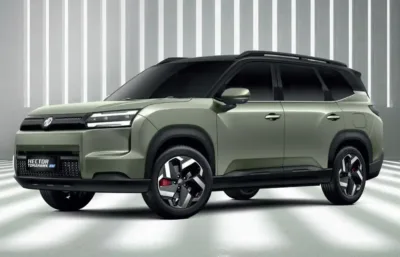
The PHEV version is arguably the biggest technological highlight of the new SUV. The plug-in hybrid uses a rechargeable battery, electric motor and petrol engine. The battery can be charged externally, providing the option to run the vehicle with electric power alone for shorter journeys. When the battery charge or driving conditions require, the petrol engine can take over or combine with the electric motor. MG has designed the Tomahawk PHEV around four different operating modes:
- Pure EV
- Series Hybrid
- Parallel Hybrid
- Engine Direct Drive
The vehicle's intelligent energy-management system decides which mode is most appropriate based on the driving conditions. MG describes it as part of the intelligence built into its ADAPT architecture.
Range of MG Hector Tomahawk
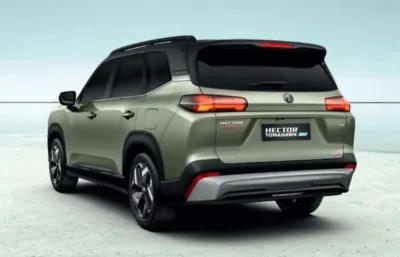
The Hector Tomahawk PHEV offers an electric-only range of around 115km, as highlighted at the launch. This is relevant for Indian buyers as many of their daily commutes are considerably shorter than 115km. For example, an owner could potentially charge the vehicle at home and use the electric power for regular city driving.
For longer highway journeys, the petrol engine provides additional flexibility. MG has also highlighted a combined range of around 1,100km with a full tank and charge. The PHEV therefore attempts to solve one of the biggest concerns associated with pure EVs: long-distance travel without convenient charging access.
Power and Performance of MG Hector Tomahawk
The Hector Tomahawk PHEV produces 184kW power, approximately 250PS, according to the launch information. MG has quoted a 0-100km/h acceleration time of approximately 9 seconds. This gives the large seven-seat SUV a strong performance figure while retaining the flexibility of its hybrid system.
World's First Electromagnetic DHT
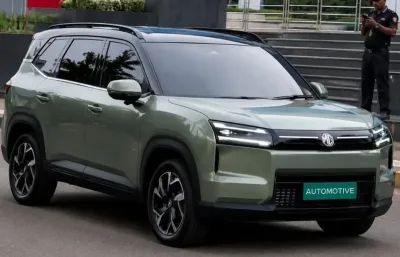
One of the most important engineering features of the Hector Tomahawk PHEV is the Electromagnetic Dedicated Hybrid Transmission. MG describes it as the world's first electromagnetic DHT. The system uses an electromagnetic e-clutch, which MG says offers up to four times faster response.
MG's official ADAPT information also highlights 98.8% transmission efficiency for the electromagnetic DHT. The objective is to make transitions between the engine, electric motor and combined power delivery smoother and quicker. This is important because a hybrid vehicle will constantly change how its powertrain operates. A well-controlled transition can improve both driving refinement and efficiency.
Four Intelligent Drive Modes Explained
- Pure EV Mode: At lower speeds and with sufficient battery charge, the SUV can operate using electric power alone. This is designed for quieter and efficient urban driving.
- Series Hybrid Mode: The petrol engine generates electricity while the electric motor drives the vehicle. This allows the motor to remain responsible for propulsion while the engine supports the energy requirement.
- Parallel Hybrid Mode: The petrol engine and electric motor work together. This mode can be useful when stronger acceleration or additional power is required.
- Engine Direct Drive: At highway speeds, the engine can directly drive the wheels. MG says this mode is intended to maximise fuel efficiency during the appropriate driving conditions.
What Is the MG ADAPT Platform?
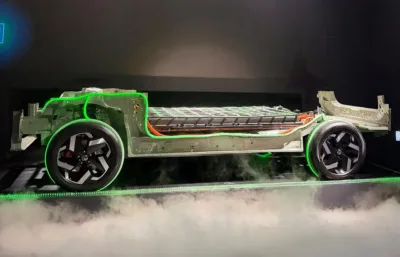
The ADAPT architecture is perhaps more important to MG's future than the Hector Tomahawk itself. MG describes ADAPT as an India-first multi-NEV platform designed to support four electrified powertrain formats:
PHEV + HEV + EV + REEV
This means MG does not need to develop an entirely different basic architecture for each type of electrified vehicle. The platform combines technologies including a dedicated hybrid engine, dedicated battery system, a 10-in-1 intelligent electric drive unit and the electromagnetic DHT. MG also says the platform's intelligent energy-management system can automatically determine the most efficient operating mode.
Also read: Types of Electric Vehicles Explained | BEV vs PHEV vs HEV vs MHEV
Why ADAPT Matters for India?
India's transition to electrification is developing differently across customer groups.
Some buyers are ready for a full EV, while others remain concerned about charging availability and long-distance travel. A PHEV can bridge that gap. The Hector Tomahawk demonstrates how MG can offer an EV for customers who want pure electric driving while also providing a PHEV for buyers who want electric driving with petrol-powered long-distance flexibility. MG's official ADAPT platform also supports HEV and REEV configurations, meaning the technology could potentially be used for several future products.
MG Hector Tomahawk EV
Alongside the PHEV, MG has introduced the pure electric version of the Tomahawk. The EV uses a 69.2kWh MRCB battery and produces 230kW of power. It also gets Vehicle-to-Home (V2H) capability, which MG is highlighting as an India-first claim. The vehicle can therefore do more than simply transport passengers. With compatible equipment, its battery can also act as an energy source for a home. This could become useful during power interruptions or when stored energy needs to be used elsewhere.
Technology-Focused Cabin of MG Hector Tomahawk
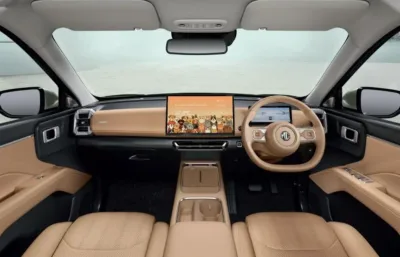
The Tomahawk also takes a technology-heavy approach inside the cabin. One of the biggest highlights is the 39.62cm (15.6-inch) HD Grand View display. The SUV also gets i-SMART 3.0, MG's connected-car technology suite.
Another unusual feature is the Gen-4 cabin with Karaoke, adding an entertainment-focused element to the family SUV. MG is also highlighting intelligent drive and cabin functions, making the Tomahawk more than just a conventional three-row SUV with an electric powertrain.
ADAS and Safety features of MG Hector Tomahawk
The Hector Tomahawk also focuses strongly on driver assistance. The launch information highlights Level 2+ ADAS, with features to assist with highway and urban driving. The exact availability of individual ADAS functions can vary by variant, so buyers should check the official variant-wise equipment list before booking. Battery safety is an important part of MG's electrification strategy. MG claims its battery technology has gone through 2,000+ bench tests and 490+ vehicle validations, with its battery-management system continuously monitoring battery health.
Lifetime High-Voltage Battery Warranty of MG Hector Tomahawk
Another significant ownership highlight announced at the launch is a lifetime warranty on the high-voltage battery. The launch presentation also highlights a 3-year unlimited vehicle warranty and 3 years of roadside assistance. A strong battery warranty can be particularly important for customers considering an EV for long-term ownership, as battery durability is one of the major concerns among first-time EV buyers.
MG Hector Tomahawk vs Competition
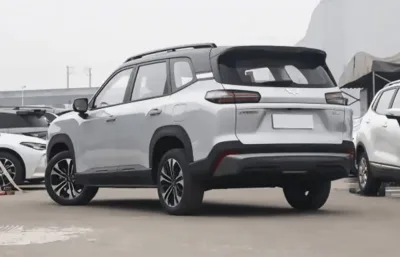
The Tomahawk enters a market where buyers already have several large family vehicles to consider. Its most relevant electric competition comes from models such as the Kia Carens Clavis EV and other upcoming or existing electric SUVs. Kia's official website confirms that the Carens Clavis EV is available in both six- and seven-seat configurations with 42kWh and 51.4kWh battery options. The Tomahawk's key difference is that it combines a seven-seat format with both EV and PHEV choices.
Traditional three-row SUVs such as the Tata Safari also remain relevant for customers who prioritise family space and conventional powertrains. Tata's official website confirms that the Safari is available in six- and seven-seat configurations. The Tomahawk therefore has to compete on more than price. Its main differentiators are:
- PHEV technology
- EV and PHEV choice
- ADAPT architecture
- Electromagnetic DHT
- 115km electric-only PHEV range
- Around 1,100km combined PHEV range
- V2H capability
- Large 15.6-inch display
- i-SMART 3.0
- Level 2+ ADAS
- Seven-seat practicality
How Can the Hector Tomahawk Make Its Mark?
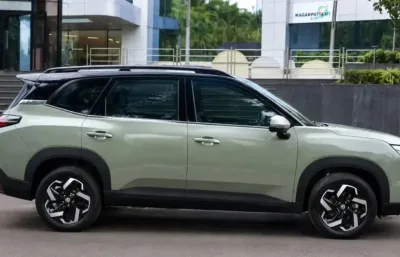
The biggest opportunity for MG is the PHEV technology. Pure EV adoption is on the rise, but charging infrastructure and long-distance travel are still important considerations for many Indian buyers. The Tomahawk PHEV provides an alternative. A customer can charge the battery and use the electric power for daily driving, while the petrol engine provides additional flexibility for longer journeys.
The second advantage is ADAPT. MG is not presenting the Tomahawk as an isolated technology experiment. ADAPT is intended as a broader platform that can support multiple types of new-energy vehicles. If MG successfully expands this technology into other models, the Tomahawk could become the starting point of a much larger electrification strategy.
Final Verdict
The MG Hector Tomahawk is an important launch for JSW MG Motor India as it combines three major ideas: electrification, flexibility and intelligent powertrain management. The PHEV (Plug-in Hybrid Electric Vehicle) is the Tomahawk's headline attraction, and it has four driving modes, 184kW, a pure electric range of around 115km and a combined range of almost 1,100km.
This underlines the ADAPT platform's potential as a PHEV, HEV, EV and REEV powertrain architecture, forming a cornerstone for MG's future product plans. The vehicle also has V2H (Vehicle to Home) functionality, a 15.6-inch display, i-SMART 3.0, Level 2+ Advanced Driver Assistance Systems and a lifetime high-voltage battery warranty. With superior efficiency, MG's charging infrastructure and after-sales service, the Tomahawk could do well in the Indian three-row SUV segment.