CATL has been awarded the MINDS Award by the World Economic Forum for its AI-Driven next-generation battery design.
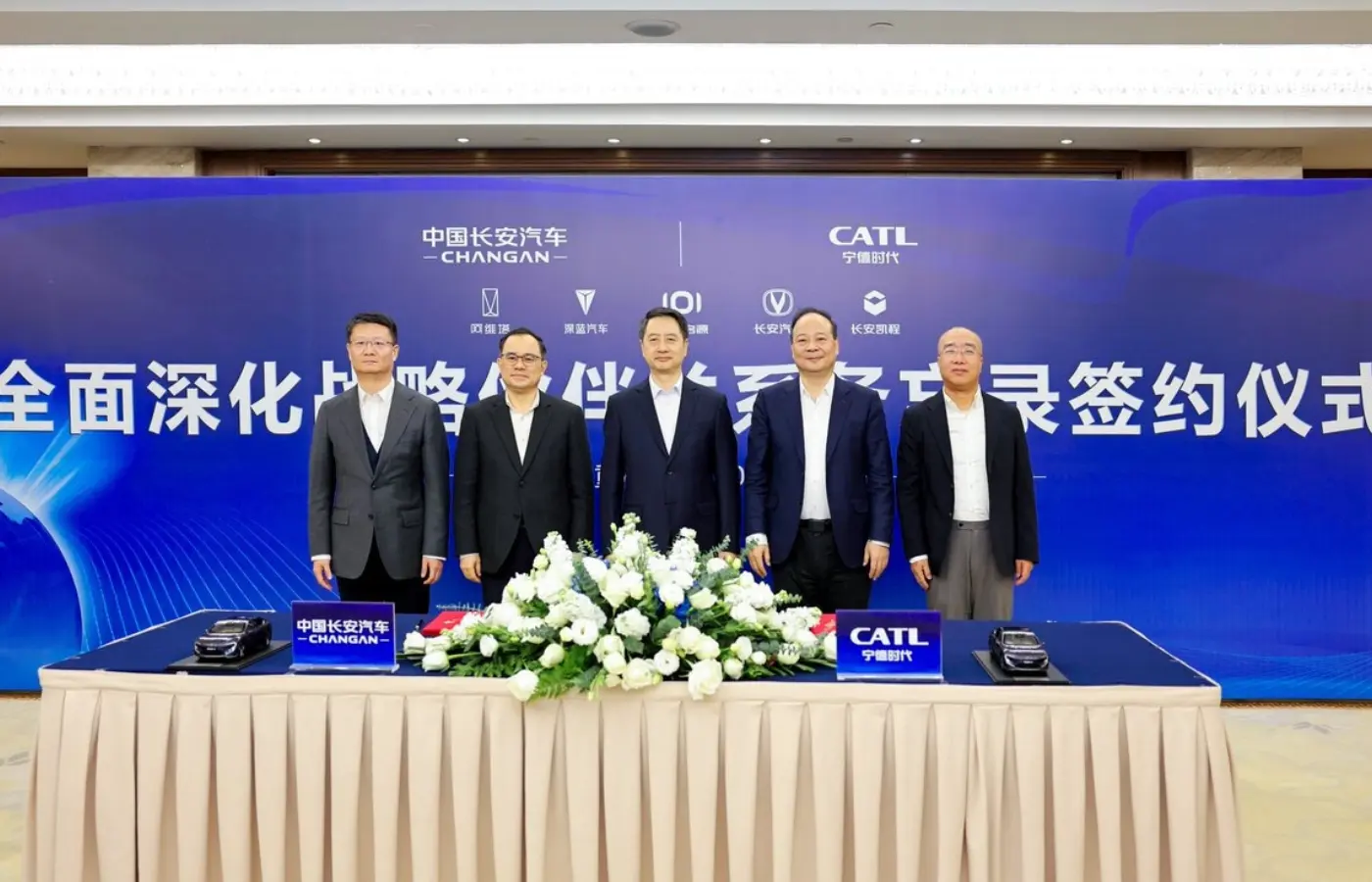
CATL has been awarded the MINDS (Meaningful, Intelligent, Novel, Deployable Solutions) Award for its state-of-the-art AI integrated Next Generation lithium-ion battery Design, achieving global recognition all over the world.
This project revolutionaries the lithium-ion battery R&D paradigm, which is equipped with augmented reality, providing superior performance and enhanced reliability with higher range on a single charge. All the applicants were thoroughly tested across five major parameters which includes strategy, talent, data, technology & governance.
CATL Next Generation Lithium-Ion Battery Design
The design of the battery involves the development model from reverse design and experimentation of trial-and-error to implement design, before the production starts. Thus the new battery is designed by integrating CATL’s major advancements across material science, cell design, manufacturing processes and equipment.
.webp)
The company has also developed a completely new design platform that redefines the development process of lithium-ion batteries. The platform is a perfect blend of physics-based electrochemical models with machine learning, in order to provide accurate predictions and speed up the process in cell design.
It operates on a premises sourced private cloud which collects more than 50 million data records to strengthen its models. With the integration of physics-informed machine learning and agentic AI, it basically works like an automated “digital engineer” which automatically produces refined design options.
Thus the interrelated process of data, physics, and computation has transformed battery development beyond conventional trial-and-error in order to make a more detailed and advanced process.
CATL has trained more than 1,00,000 battery design cases on the information of 600 TB of test and aftermarket data received from a diverse range of NEVs, thus achieving prediction accuracy of up to 95%.
.jpeg)