Tata Harrier EV Real-World range Revealed
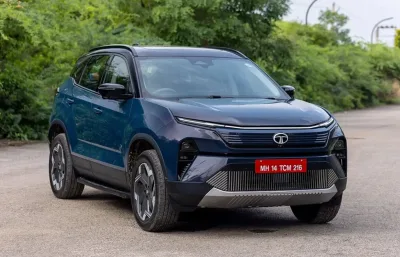
The Tata Harrier EV is an all-electric mid-size SUV built on Tata's acti.ev+ platform, available in 65 kWh and 75 kWh capacities. The top-spec 75 kWh version with LFP battery pack gets a dual-motor QWD (Quad-Wheel Drive) setup and has a claimed MIDC range of 622 km. But what real-world range can you actually expect from the Harrier EV in Indian driving conditions?
With an impressive output of 504 Nm torque and the ability to accelerate from 0 to 100 km/h in just 6.3 seconds in Boost mode, we put the Harrier EV QWD through a 100% to 0% real-world range test, and it covered 450 km on a single charge. The test was performed on a mixed city-and-highway route, using City Mode, Level 1 regenerative braking, 23–24°C air-conditioning, and normal driving conditions.
Tata Harrier EV QWD Real-World Range Test
We started the test with the battery at 100% SOC (State of Charge) and continued driving until it reached 0%.
The Harrier EV covered 450 km, which is around 72% of its claimed 622 km MIDC range. The result is also slightly below Tata's stated 460–490 km C75 range for the 75 kWh QWD version.
However, the 450 km figure should be looked at in the context of our test conditions rather than directly compared with the MIDC figure. MIDC is a certified test cycle, while our test involved actual roads, traffic, varying speeds, air-conditioning and normal driving conditions.
For someone planning a long-distance journey, the more useful takeaway is that the Harrier EV QWD can cover around 450 km in a mixed real-world drive under the conditions of our test, rather than expecting the full 622 km claimed range.
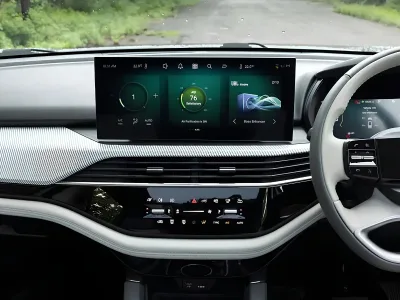
How We Tested the Harrier EV Range
We kept the testing conditions consistent throughout the drive:
- The battery was charged to 100% SOC before starting the test.
- We used City Mode, which is the default drive mode when the Harrier EV is started.
- Regenerative braking was kept at Level 1 to maintain a more natural driving response.
- The air-conditioning was maintained at 23–24°C, with the fan generally between speeds 1 and 2.
- The test included both city driving and highway stretches.
- We continued the test until the battery reached 0% SOC.
This combination was intended to represent a realistic mix of driving rather than trying to maximise the range through extremely slow or controlled driving.
What Happened as the Battery Level Dropped?
One of the most interesting parts of our test was what happened during the final part of the drive.
At 10% SOC, the Harrier EV restricted its maximum speed to 78 km/h. As the battery level dropped further to 5%, the speed limit was reduced again to 60 km/h.
Once the battery dropped below 5%, the air-conditioning was automatically disabled. The vehicle entered a limp mode to reduce energy consumption and preserve whatever charge remained.
This is important when interpreting our 450 km result. The final kilometres were not driven with the same performance and comfort available at a higher state of charge. The car progressively reduced its capabilities as the battery approached depletion.
Also Check: Mahindra XEV 9e vs Tata Harrier EV: Price, Range, Features & Specifications Compared
Minor Issues We Noticed During the Range Test
The range test also gave us an opportunity to observe the car beyond its battery consumption.
We noticed a creaking noise from the powered driver's seat while adjusting it. The noise was noticeable each time the seat was operated and was one of the more annoying minor issues we encountered during the test.
We also noticed that the blind-spot monitor feed on the instrument cluster became stuck, even after the system was switched off.
Neither issue affected the range test itself, but they are worth mentioning because they were observed during our time with the vehicle. Software-related glitches may also be addressed through future updates from Tata.
Also Check: Tata Harrier EV Pros & Cons Explained
Final Conclusion of this Range Test
Our 100% to 0% real world range test delivered 450 km from the Harrier EV QWD's 75 kWh battery.
While this is considerably lower than the 622 km MIDC figure, it provides a useful real-world reference for someone trying to understand what the SUV can deliver on an actual mixed drive.
The car also showed how it manages a critically low battery. During our test, speed was restricted at 10% and 5% SOC, while the air-conditioning was disabled below 5%.
Based on our test, the Harrier EV QWD is a capable long-distance electric SUV, but buyers should plan highway journeys around its real-world range rather than the headline MIDC figure.
Explore More EV Guides
Looking for more electric vehicle guides, ownership costs, maintenance information and EV-related updates?
Visit All About EVs Blogs →